Short answer
Yes. A mini-split is a heat pump, so the same system that cools in summer heats in winter by moving heat from the outdoor air into the house. ENERGY STAR tests cold climate heat pumps down to 5°F, far below Palmdale’s December average low of 34°F, so a well-sized system can heat an Antelope Valley home through the winter.
Mini-splits are known for cooling, so a lot of people are surprised to hear they heat too. This guide explains how a mini-split makes heat, how it copes with cold nights in Palmdale and Lancaster, what its heat feels like next to a furnace, why the outdoor unit sometimes steams, and what keeps it heating all winter.
A mini-split is a heat pump
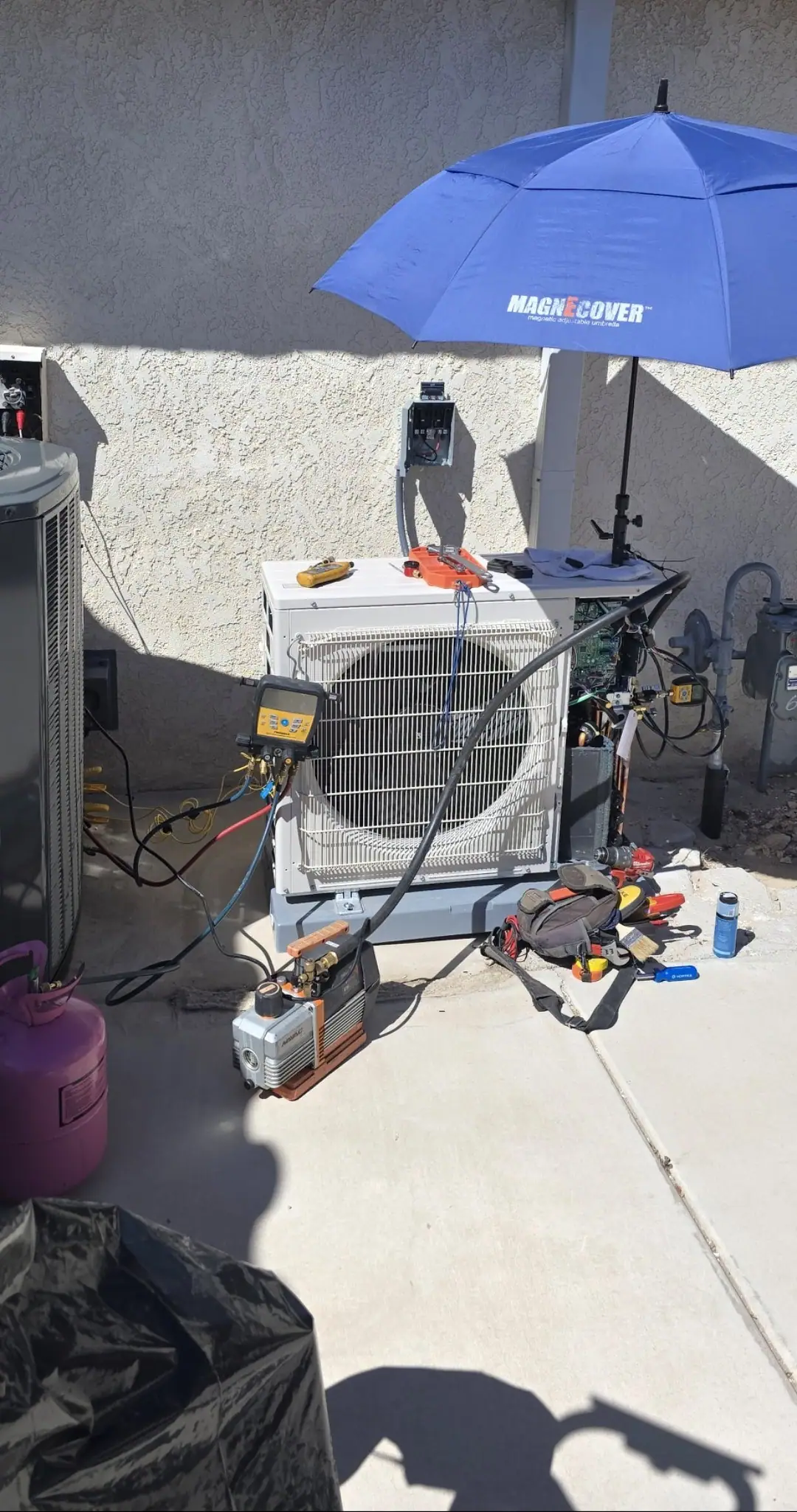
In the summer, a mini-split pulls heat out of the room and lets it go outside. In the winter it runs the same cycle in reverse. The outdoor unit pulls heat from the outside air, the refrigerant carries it in, and the indoor unit lets it out into the room. ENERGY STAR puts it in one line: the outside unit extracts heat from the air, even when it is cold.
Cold air still has heat in it, even on a freezing night. A heat pump moves that heat inside instead of burning fuel to make it, which is why it can deliver more heat than the electricity it uses. A mini-split runs on electricity alone, with no gas line, no flame and no flue.
The colder it gets outside, the harder any heat pump has to work and the less heat it can pull in. That is why the system has to be sized for your coldest nights, not just your hottest days, and why the model you choose matters as much as the size.
How cold it gets here, and why it matters
Palmdale and Lancaster sit in the high desert, and winter nights here are colder than most people in Los Angeles expect. WeatherSpark’s Palmdale averages put the cold season from about November 20 to March 4, with December the coldest month at an average low of 34°F and an average high of 57°F. Clear desert skies let the heat escape fast after sunset, so the heat has to keep up after dark.
The California Energy Commission puts the Antelope Valley in its own building climate zone, Zone 14, the high desert (CEC climate zone maps). That zone has hot summers and real winters, which is exactly the job a heat pump does: cooling and heating from the same equipment.
For a heat pump, an average low in the 30s is well within its range. ENERGY STAR certifies cold climate heat pumps by testing them down to 5°F and says they keep working below that. The NEEP cold climate heat pump list goes further and publishes each model’s heating output at 5°F, which is the number to look at if your home sits in a colder pocket of the valley.
Cold air still holds heat, even on a freezing night. A heat pump moves that heat inside instead of burning fuel to make it.
What heat from a mini-split feels like
If you are used to a gas furnace, a heat pump feels different. A furnace blasts very hot air for a few minutes and shuts off, then the room cools until it fires again. A mini-split blows warm air, not hot, and runs longer and steadier to hold the room where you set it.
It works best at a steady setting. Turning it way down when you leave and way up when you get home makes it play catch-up on the coldest part of the evening. Pick a setting you like and leave it, or lower it only a few degrees overnight.
Because each room has its own unit, you can keep the bedrooms warm at night and leave the rooms nobody is using turned down. In a room that has been getting by on a space heater, one unit high on the wall heats the whole room, with nothing on the floor and no cord to trip over. The rooms that run cold in the winter, like an addition, a converted garage or a room with a lot of glass, are often the same ones that run hot in the summer, so a mini-split there fixes the room in both seasons.
Defrost is normal
When it is cold and there is moisture in the air, frost can build up on the outdoor unit’s coil. Every so often the system melts it off on its own by briefly running in reverse.
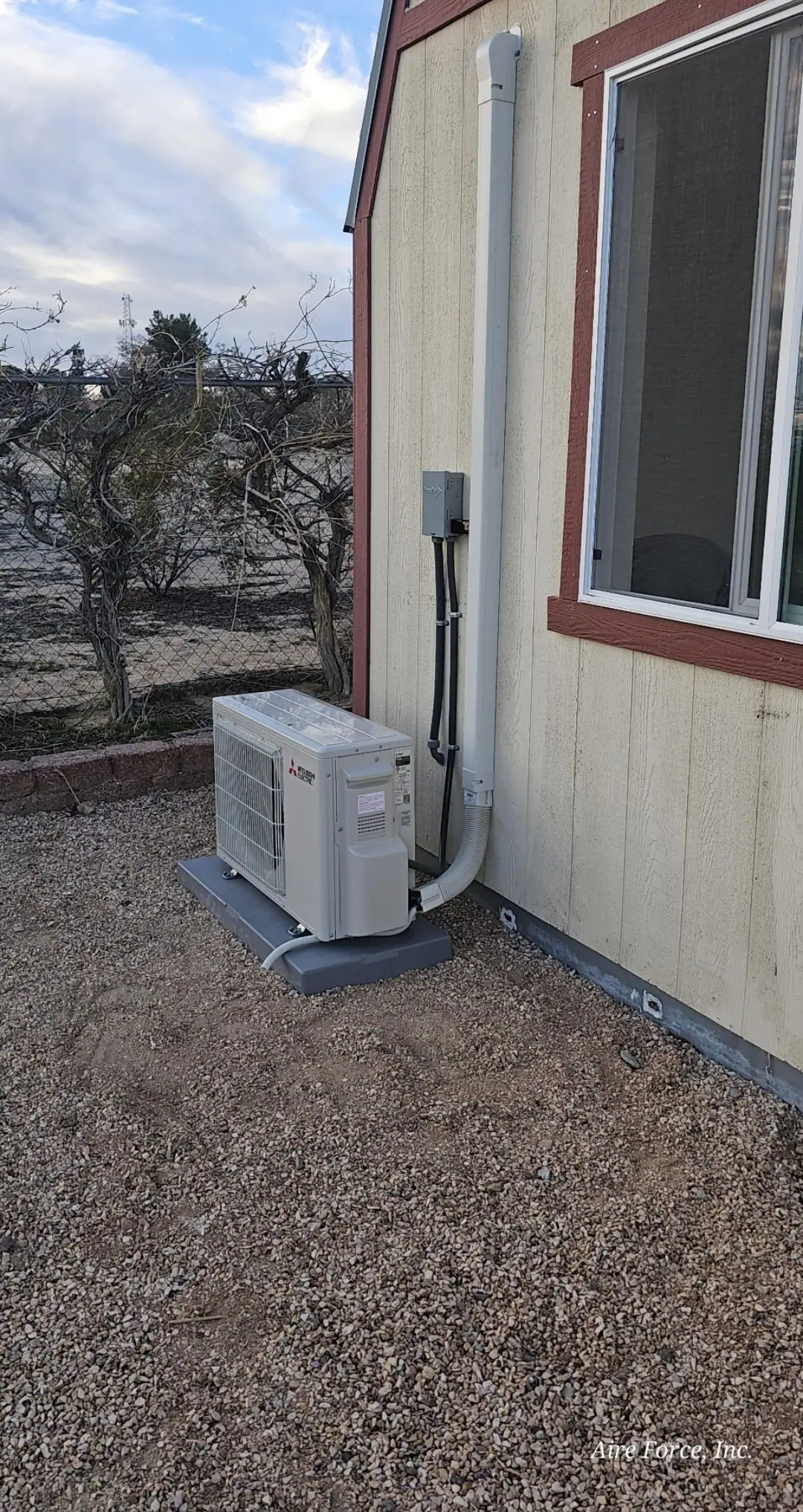
While it does, the indoor unit may stop blowing for a short while, and you may see steam rising off the outdoor unit. Both are normal. The melted frost drains out under the unit, which is one reason outdoor units in cold areas sit up on a bracket or a raised stand: the water needs somewhere to run off, and the unit should not sit in snow or ice. It also needs open air around it; ENERGY STAR advises against tight spots hemmed in by shrubs or walls.
If the indoor unit keeps blowing cool air long after a defrost, or the outdoor unit stays covered in ice, have it checked. A unit that never clears its ice is not heating, and the cause can be anything from a blocked drain to a sensor or refrigerant problem.
Do you need backup heat
In colder parts of the country, heat pumps are often paired with a backup: electric heat strips in an air handler, or a gas furnace that takes over below a certain temperature. In the Antelope Valley the question is smaller, because the coldest nights here are well within what a cold climate heat pump is tested for.
ENERGY STAR says certified cold climate heat pumps keep working below 5°F, while Palmdale’s coldest month averages a low of 34°F (WeatherSpark). Most homes here do not need a second heat source when the mini-split system is sized for the coldest nights. Where backup makes sense is a home that already has a working furnace, a room far from any indoor unit, or a household that wants a fallback if a unit ever needs repair in January.If you already have a furnace in good shape, keeping it costs nothing extra and gives you that fallback. If it is old, whether to replace it or retire it is worth going over at the consultation, with the age of the rest of the system in mind. Either way, a space heater is not the plan; it heats a small area at a high cost per hour, and it is the first thing a mini-split in that room replaces.
What you do want is a system that can keep up on its own. Check the low temperature heating output for the model you are quoted on the NEEP list, and ask how it compares with the heating load of the rooms it serves.
Mini-split or furnace for winter heat
Plenty of Antelope Valley homes have a gas furnace already. You do not have to choose one or the other. Some homes heat with mini-splits alone. Others keep the furnace as a backup for the coldest nights, or for the rooms the mini-splits do not reach, and let the mini-splits carry the mild days.
| Mini-split heat pump | Gas furnace | |
|---|---|---|
| Fuel | Electricity | Natural gas or propane |
| How it heats | Moves heat in from outside | Burns fuel to make heat |
| Also cools | Yes, same equipment | No, needs a separate air conditioner |
| Air it delivers | Warm, steady | Hot, in bursts |
| Room by room control | Yes | No, one thermostat |
| Venting | None | Needs a flue |
For the furnace, ENERGY STAR lists efficiency ratings by model if you are comparing replacements. Which mix fits your house depends on its layout and the furnace you have now, and we go over both at the consultation.
Keeping it heating all winter
- Clean the filters. Each indoor unit has a washable filter. ENERGY STAR says to clean it when it looks dirty or the filter light comes on. Wind and dust in the valley mean that can be often, and a clogged filter cuts the airflow and the heat that comes with it.
- Keep the outdoor unit clear. Tumbleweeds, leaves and anything the wind piles against it block the air it needs.
- Leave room in front of the indoor unit. Curtains, shelves and tall furniture in front of it trap the warm air near the ceiling.
- Leave it on a steady setting. Big swings make it work harder at the worst time of night.
- Have it checked in the fall. ENERGY STAR’s maintenance checklist says the best time to check a heating system is in the fall, before the first cold night.
Wind matters more here than in most places. The windier part of the year in Palmdale runs from early November into June (WeatherSpark), so dust builds up on filters and outdoor coils through the whole heating season. Our maintenance visits include cleaning both.
Sized for both seasons
A system that cools through a Lancaster summer and heats through a valley winter has to be sized for both. An undersized heat pump struggles on the coldest nights; an oversized one cycles on and off and never evens the room out. The size comes from a room-by-room load calculation, the method in ACCA Manual J, which counts the windows, insulation and the way each room faces.
At a free in-home consultation, a factory-trained technician from Aire Force looks at the rooms, how they heat now and where the units could go, and goes over every detail with you before any work begins. If your current heat is not keeping up this winter, we also handle heating repair for furnaces and heat pumps, and new ductless mini-splits across Palmdale, Lancaster, Acton, Quartz Hill and Littlerock.
Questions people also ask
Why is steam coming off my mini-split outside?
It is most likely a defrost. In cold, damp weather frost builds up on the outdoor unit, and the system melts it off on its own. If the unit stays covered in ice, have it checked.
Why did my mini-split stop blowing in heat mode?
It may be defrosting, or warming its coil after it just turned on so it does not blow cold air. Give it a few minutes. If it keeps blowing cool air or will not heat the room, turn it off and call or text us.
Can a mini-split heat a garage or casita in the winter?
Yes. It needs power and a spot for the outdoor unit, and it heats and cools that space on its own, with its own control. Insulating the garage door makes a big difference to how well it holds the heat.