What an air cleaner can and can’t do
The EPA is clear on both sides: air cleaners and HVAC filters can reduce indoor air pollution, but they cannot remove all pollutants from the air. Its advice is that the most effective steps are reducing the sources of pollution and ventilating with clean outdoor air, with filtration as an effective supplement.
In practice that means a whole-home air cleaner is very good at what moves through the system, like dust, pollen, pet dander and smoke particles, and it works best alongside the basics: keeping dust from getting in, running exhaust fans and airing the house out when the outside air is clean.
How a whole-home air cleaner works
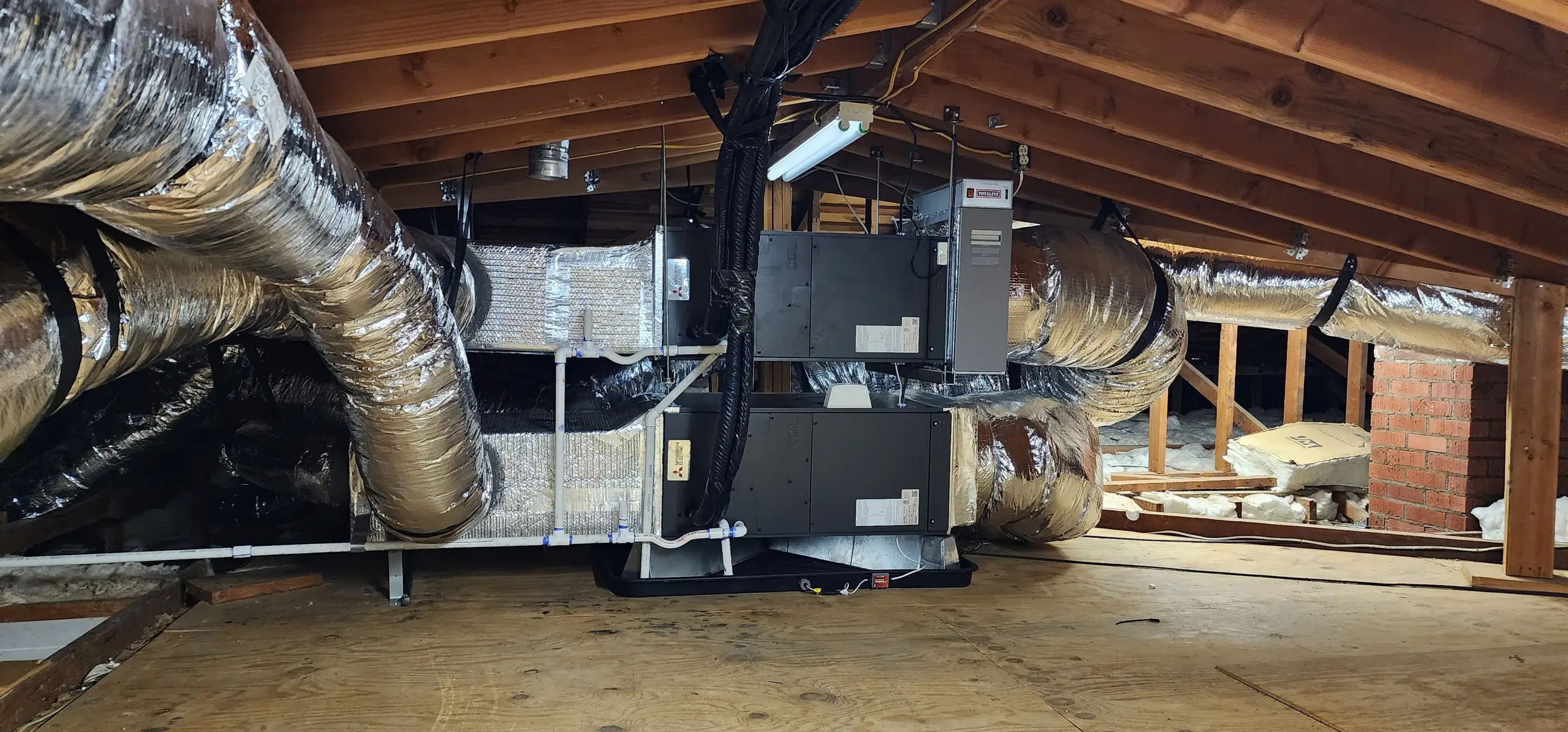
All the air your system moves passes through the return and the filter before it reaches the equipment. A whole-home air cleaner sits in that path, so it treats the air of every room the system serves. There is more than one kind:
- High-efficiency media filters. A deeper filter cabinet holding a thicker filter, which can catch finer particles without choking the airflow.
- Electronic air cleaners. Charge particles and collect them on plates or a filter.
- Add-ons aimed at specific problems, such as ultraviolet lamps near the coil.
The EPA’s guide to air cleaners in the home covers the types and what to look for when choosing one.
Filters and MERV ratings
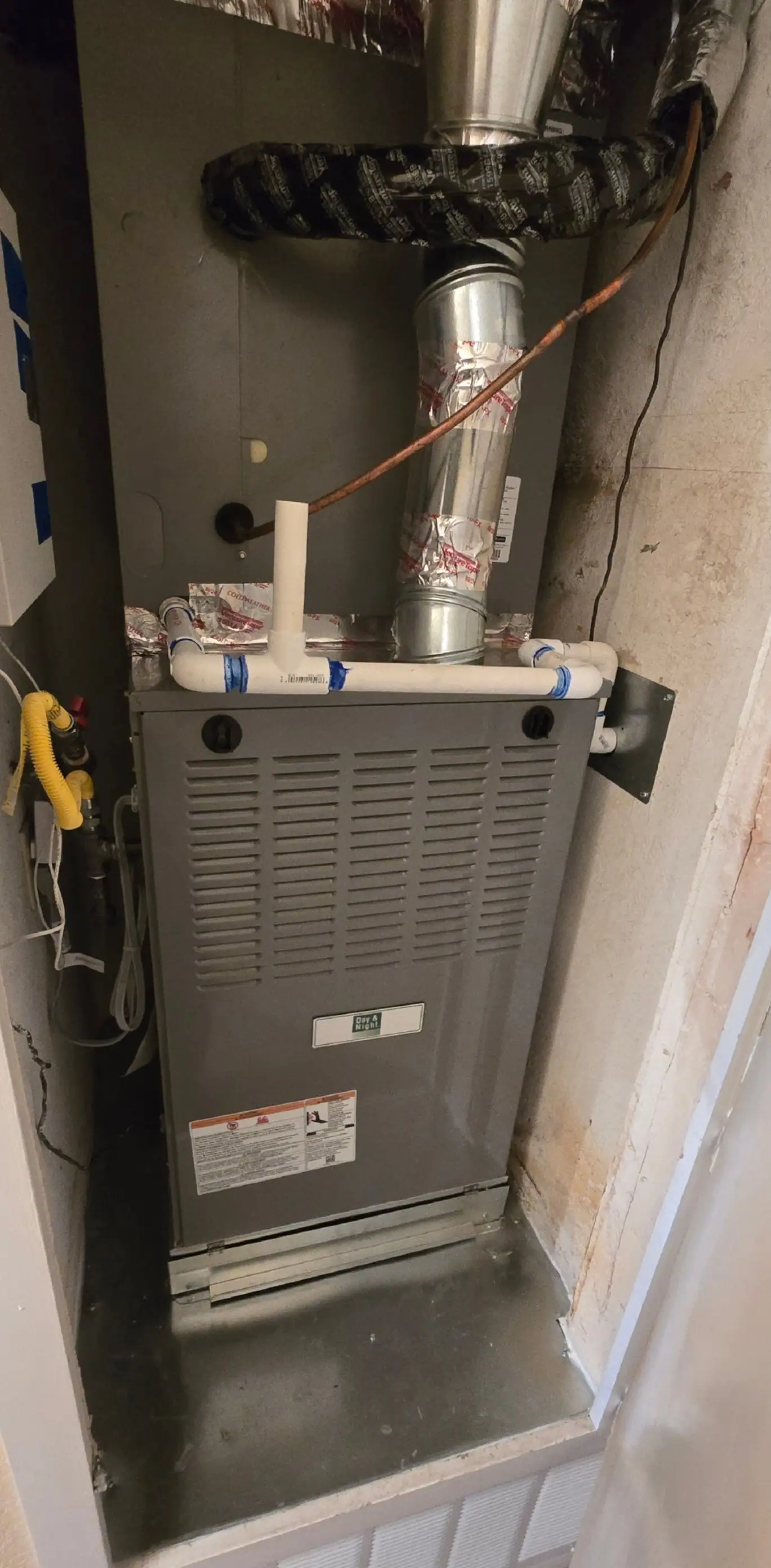
Filters are rated by MERV, which the EPA explains reports a filter’s ability to capture particles between 0.3 and 10 microns; the higher the rating, the better it traps those sizes. The EPA suggests at least MERV 13 if you upgrade, or as high a rating as your system’s fan and filter slot can handle.
That last part matters. A thin, dense filter jammed into a slot made for a basic filter can restrict the airflow, which makes the system work harder and can freeze the coil. A proper filter cabinet gives a high-rated filter enough surface to breathe. We look at your system and recommend one that fits it.
Whole-house or portable
A portable air purifier cleans the room it is in, as long as it is running and the door is shut. A whole-home air cleaner cleans the air for every room your system reaches, every time the system runs, with nothing on the floor and no cords.
| Whole-home air cleaner | Portable unit | |
|---|---|---|
| Rooms covered | Every room on the system | One room |
| When it cleans | Whenever the system runs | Whenever it is switched on |
| Noise and floor space | None in the room | A fan in the room |
| Upkeep | Filter or cell changes on a schedule | Filter changes per unit |
Homes with ductless mini-splits and no central system don’t have a duct path to put one in; there, portable units and the mini-splits’ own filters do the work.
Dust, smoke and allergies in the valley
The windier part of the year in Palmdale runs from November into June (WeatherSpark), and that dust finds its way inside on every gust and every open door. Homes out in the open desert, like those around Littlerock, take more of it.
Smoke from fires is fine particles, the kind a high-rated filter is made to catch while the system runs. During smoky days, keeping windows closed and running the system’s fan helps the air cleaner do its job. For allergies, catching pollen and dander in the system means less of it in the air you breathe and less settling on surfaces.
Picked for your home
There is more than one kind of whole-home air cleaner. We talk through what you want to improve, whether that is dust, allergies or smoke, and every detail before we start, so you know exactly what to expect and what it will cost.
Air purifiers are one of our specialties. We add them to existing systems in Palmdale, Lancaster and across the Antelope Valley. Our maintenance visits keep the filter or cell on schedule after it is in.