Short answer
For most Palmdale and Lancaster homes, the big heat pump incentives are closed in 2026. The federal 25C tax credit does not cover equipment installed after December 31, 2025 (IRS), and HEEHRA single-family rebates in Southern California were fully reserved as of January 7, 2026 (TECH Clean California). A few local and future programs are worth checking before you buy.
If you have read that a heat pump or mini-split comes with thousands back from the government, that was true for a while. In 2026 most of that money is spent or gone. This guide lays out each program a Palmdale or Lancaster homeowner might have heard of, where it stands today, what could come back, and how to keep a project eligible if it does.
Heat pump rebates in 2026 at a glance
Here is where each program stood when this post was written in late October 2026. Programs open and close with their budgets, so check the linked page before you count on any of them.
| Program | What it covered | Status in 2026 |
|---|---|---|
| Federal 25C tax credit | 30% of the cost of a qualifying heat pump, capped each year | Ended for equipment placed in service after December 31, 2025 |
| HEEHRA rebates | Income-qualified rebates for heat pump HVAC | Single-family fully reserved; waitlist only |
| TECH Clean California | Statewide heat pump HVAC incentives through enrolled contractors | Single-family fully reserved; not taking new reservations |
| South Coast AQMD Go Zero | Rebates for heat pumps that replace a gas or propane unit | Open in its own district; check your address |
| HEEHRA Phase II and HOMES | Future state rebates under the federal program | Not launched; dates to be announced |
The rest of this post explains each line, and what it means for a project you are planning this winter or next spring.
The federal heat pump tax credit ended in 2025
From 2023 through 2025, the Energy Efficient Home Improvement Credit, known by its tax code section as 25C, let homeowners claim 30% of the cost of a qualifying heat pump, up to $2,000 a year for heat pumps. A mini-split heat pump could qualify if it met the efficiency tier.
That credit is over for new work. The IRS page for the credit says it applies to qualifying property placed in service before the end of 2025, and the IRS instructions for Form 5695 say it cannot be claimed for property placed in service after December 31, 2025. "Placed in service" means installed and working, not ordered or paid for.
If your system was installed and running by December 31, 2025, you can still claim it on your 2025 tax return with Form 5695. If it went in on January 1, 2026 or later, there is no federal credit for it. Talk to a tax preparer about your own return; this is the general rule, not tax advice.
Under the HEEHRA waitlist rules, a heat pump installed before the reservation is approved does not qualify. Do not buy first and apply later.
HEEHRA rebates: fully reserved, with a waitlist
HEEHRA, the Home Electrification and Appliance Rebates program, is federal money that California hands out to income-qualified households. Phase I runs through TECH Clean California and offered up to $8,000 toward a heat pump HVAC system for low-income households and up to $4,000 for moderate-income households, based on household income for the area.
The money ran out fast. TECH Clean California announced that as of January 7, 2026, HEEHRA rebates for single-family home retrofits in Central and Southern California were fully reserved, and its incentives page says single-family rebates were fully reserved statewide as of February 24, 2026. New reservation requests go on a waitlist in case budget becomes available again.
The rule that matters most: a waitlisted project only qualifies if the heat pump is installed after its reservation is approved. If you are on the waitlist and your system fails in July, replacing it right away means giving up the rebate. Weigh that before you wait out a hot summer on a promise.
For reference, HEEHRA’s income tiers come from the federal program: low income means a household under 80 percent of the area median income, and moderate income means 80 to 150 percent. Households above that were never eligible for HEEHRA, though they could use the TECH Clean California incentives and the federal tax credit while those lasted.
TECH Clean California incentives are spoken for
Separate from HEEHRA, TECH Clean California also ran statewide incentives for any household, paid through enrolled contractors, for switching to a heat pump for heating and cooling. Those were widely used in 2024 and 2025.
According to the TECH Clean California incentives page, its single-family heat pump HVAC incentives are fully reserved and not accepting new reservations. The program was a market-building effort with a fixed budget, overseen by the California Public Utilities Commission, so once the budget was reserved, it closed.
If someone quotes you a heat pump with a TECH incentive already taken off the price in 2026, ask which reservation it is attached to and get it in writing. A reservation number is the only proof the money exists for your project.
Local programs: check your address
Local rebates depend on who delivers your power and which air district you live in. Southern California Edison delivers electricity across Palmdale and Lancaster, and its current offers are listed on sce.com; programs there change through the year, so look them up by your account.
The rebate that shows up most in Los Angeles County searches is Go Zero, run by the South Coast Air Quality Management District. It pays rebates, typically $1,000 to $2,000 per heat pump, when a heat pump replaces a gas or propane furnace or water heater. The catch for the valley is that the Antelope Valley has its own air district, the Antelope Valley AQMD, separate from South Coast. Check Go Zero's eligibility for your exact address before you plan around it.
If you live in an unincorporated area like Littlerock, Acton or Quartz Hill, check the utility named on your bill. Rebates follow the utility and the air district, not the city line, so a neighbor in town may qualify for the same programs you do, or for different ones. The permit office is the part that changes outside city limits.
What could come back, and when
The federal law that funded HEEHRA also funded a second program for whole-home energy savings, known as HOMES, and California is designing a second phase of HEEHRA. The California Energy Commission says the availability of HEEHRA Phase II will be announced at a later date. Neither one has a launch date yet, and neither is expected to pay for work done before it opens.
Waitlists also move. If budget frees up because reserved projects are cancelled, waitlisted homeowners are next in line. That makes it worth getting on a waitlist now if you might qualify by income, even if you are not ready to install.
For anything that does come back, the same rules tend to apply: the equipment has to meet an efficiency level, the contractor often has to be enrolled, and the work has to be permitted and tested. Our guide to HVAC permits in Palmdale and Lancaster covers that last part.
How to plan without a rebate
With the big incentives closed, the savings that are left come from the system itself. Three things matter more than any rebate:
- Size it right. A system sized by a room-by-room load calculation, the method in ACCA Manual J, runs efficiently and lasts. One sized by guesswork costs more to run every month.
- Check the rated efficiency. Every matched outdoor and indoor combination has a rating in the AHRI Directory. Keep the certificate number with your paperwork; it is what any future program will ask for.
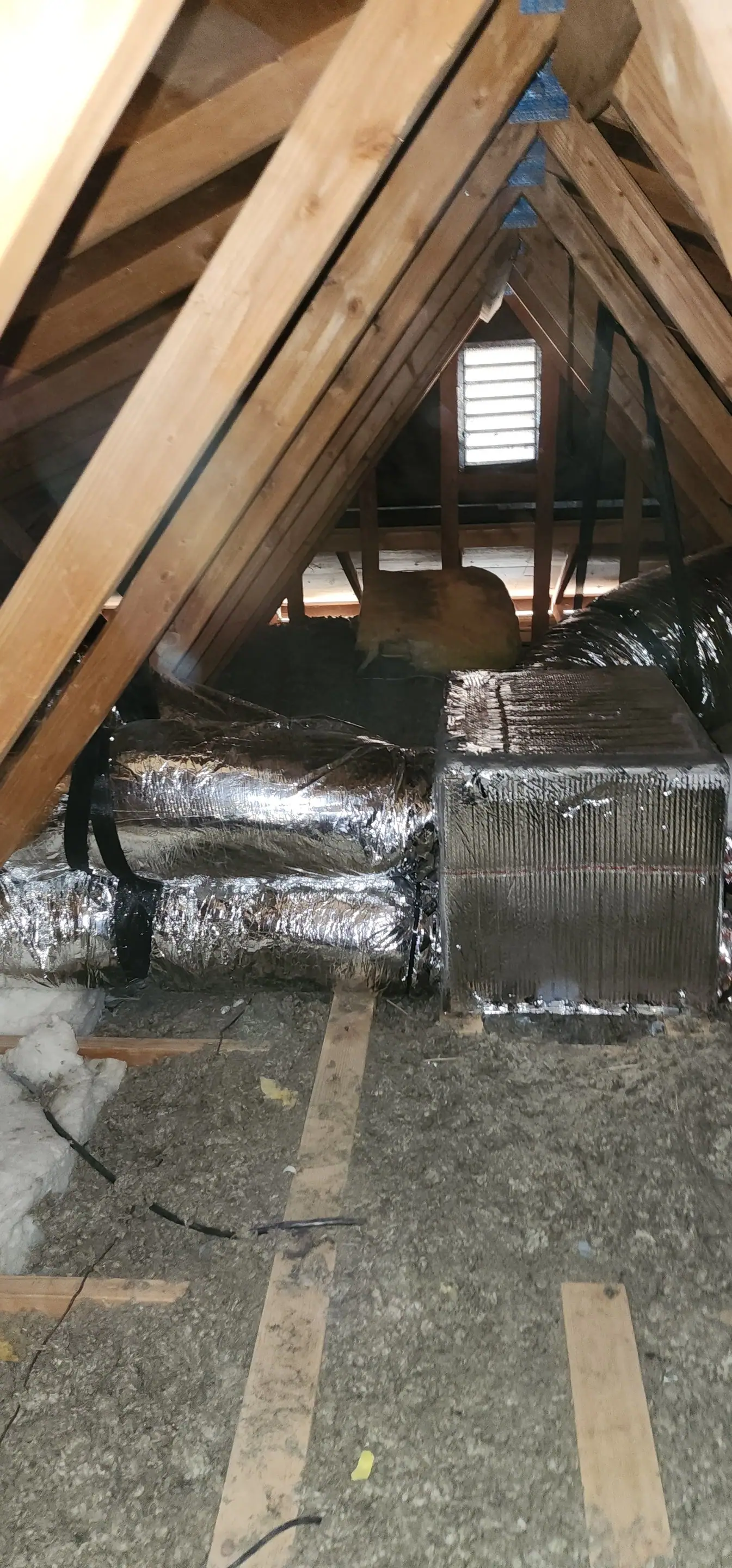
- Fix where the energy goes. In homes with ducts in the attic, ENERGY STAR estimates 20 to 30 percent of the air is lost to leaks. A ductless system avoids that loss, and sealing the ducts you keep reduces it.
If you are weighing a ductless mini-split or a new heat pump system, Aire Force offers a free in-home consultation, where a factory-trained technician looks at the house and goes over every detail with you before any work begins. What drives the price is covered in our guide to mini-split installation cost in Palmdale.
Questions to ask before you count on a rebate
Rebate programs change faster than most people replace a heating system, so a quote built around one deserves a few questions. Ask them before you sign, and get the answers in writing:
- Which program, exactly? Get the name and a link, not just "the state rebate".
- Is there a reservation, and what is its number? For TECH Clean California and HEEHRA, the reservation is what holds the money for your project.
- Is the contractor enrolled? Programs paid through contractors only pay enrolled ones.
- Does the equipment qualify? The matched system’s AHRI certificate shows its rated efficiency; check it against the program’s minimum.
- What if the program closes mid-project? Know whether the price changes if the rebate falls through.
- Is the work permitted and tested? California requires both either way, as CHEERS explains, and a program can ask for proof.
A rebate taken off the price on a quote is still only as good as the program behind it. If any of these answers is vague, treat the quote as if the rebate were not there, and compare it on that basis.
Watch the dates on anything you read online, too. Many pages still describe the 2024 and 2025 programs as if they were open. The program’s own page, linked in the table at the top of this post, is the only reliable word on whether money is available today.
Questions people also ask
Can I still claim the heat pump tax credit for 2026?
No. The IRS says the Energy Efficient Home Improvement Credit cannot be claimed for property placed in service after December 31, 2025. A system installed and running by that date can still be claimed on a 2025 return.
Do I qualify for HEEHRA by income?
HEEHRA uses household income compared with the median income for your area. TECH Clean California runs the income check, but it stopped accepting new verifications for Southern California in January 2026, so new applicants go to the waitlist.
Does a new heat pump water heater count for these programs?
Several of these programs also covered heat pump water heaters, on their own budgets and rules. Check each program page for water heaters separately; this post covers heating and cooling only.