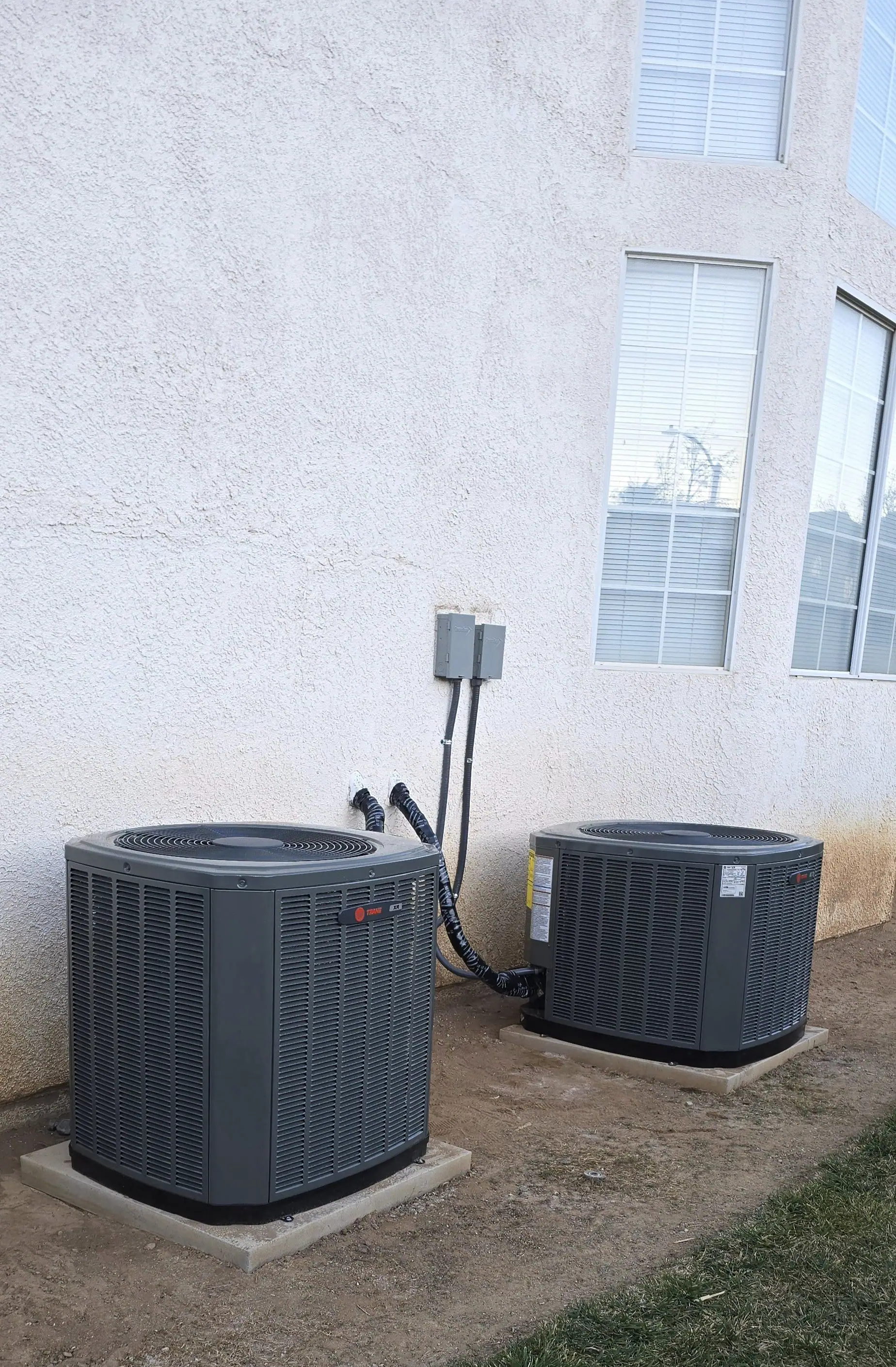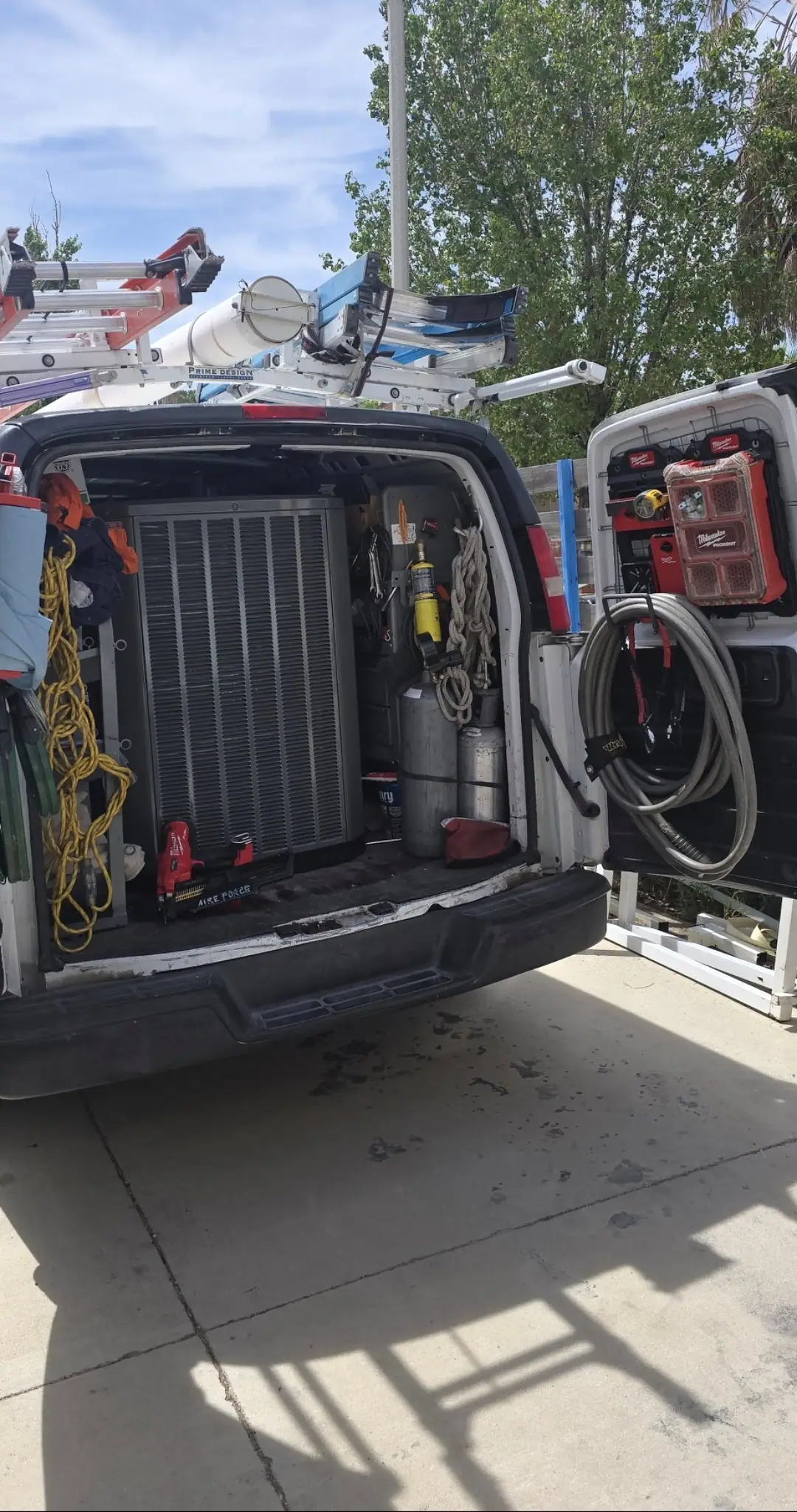
Short answer
There is no single price for a mini-split in Palmdale. The total depends on how many rooms (zones) it serves, the size and efficiency of the equipment, the style of indoor units, how far the lines run, whether the electrical panel needs work, and the permit and testing California requires. A visit to the house is the only way to price it accurately.
Every homeowner asks what a mini-split costs, and every honest answer starts with "it depends". This guide explains exactly what it depends on: how many rooms, how big and how efficient the equipment is, which indoor units you choose, what your house needs to take them, the permit and testing, and what has happened to rebates. Then it shows how to compare two quotes line by line.
Why there is no one price
A mini-split is not a single product like a refrigerator. It is a small system built for your house: an outdoor unit, one or more indoor units, refrigerant lines and wiring between them, a drain for each indoor unit, a power circuit, and the labor to put it all together and test it. Each of those changes from house to house.
A single-zone system for one bedroom with the outdoor unit right outside the wall is a short, simple job. A five-zone system for a two-story house with units on both floors, lines run through the attic and a panel that needs room for a new circuit is a much bigger one. Both are "a mini-split".
That is why a price quoted over the phone, or a number from a national website, tells you little about your own house. The sections below cover the things that move the number, so you know what to look for in an estimate.
How many zones, and how big each one is
The number of indoor units is the biggest single factor. Each one is a piece of equipment with its own line set, drain and mounting, and the outdoor unit gets bigger, or you add a second one, as the count goes up. Our guide to how many mini-split zones a home needs explains how to count them: one for each room you want to set on its own, with open-plan spaces often sharing.
Then comes the size of each unit, measured in BTUs. That should come from a room-by-room load calculation, the method in ACCA Manual J, not from the square footage alone. In the Antelope Valley the calculation has to cover both ends of the year: WeatherSpark’s Palmdale averages show July highs near 95°F and December lows near 34°F.
Getting the size right affects the price in both directions. An oversized system costs more up front and runs worse, cycling on and off without evening out the room. An undersized one is cheaper to buy and struggles on the hottest and coldest days, every year you own it.
Two quotes for the same house can differ by a lot and both be honest. Compare what is in them, not just the total.
Efficiency and cold weather performance
Mini-splits come in a range of efficiency levels, rated for cooling (SEER2) and heating (HSPF2). Higher ratings cost more to buy and less to run. Every matched combination of outdoor and indoor units has its rated numbers listed in the AHRI Directory, so you can check exactly what a quote is offering.
For heating, the question is how much heat the unit still delivers on a cold night. ENERGY STAR tests cold climate heat pumps down to 5°F, and the NEEP cold climate heat pump list publishes each model’s heating output at low temperatures. A model that holds its output in the cold usually costs more, but it is what lets a mini-split heat a valley home without help on January nights.
| Choice | Costs more up front when | Pays you back through |
|---|---|---|
| Efficiency rating | SEER2 and HSPF2 are higher | Lower monthly bills |
| Cold weather output | The model holds its heat at low temperatures | Less need for backup heat |
| Number of outdoor units | Rooms are split across several systems | Each room runs on its own; one repair does not stop the rest |
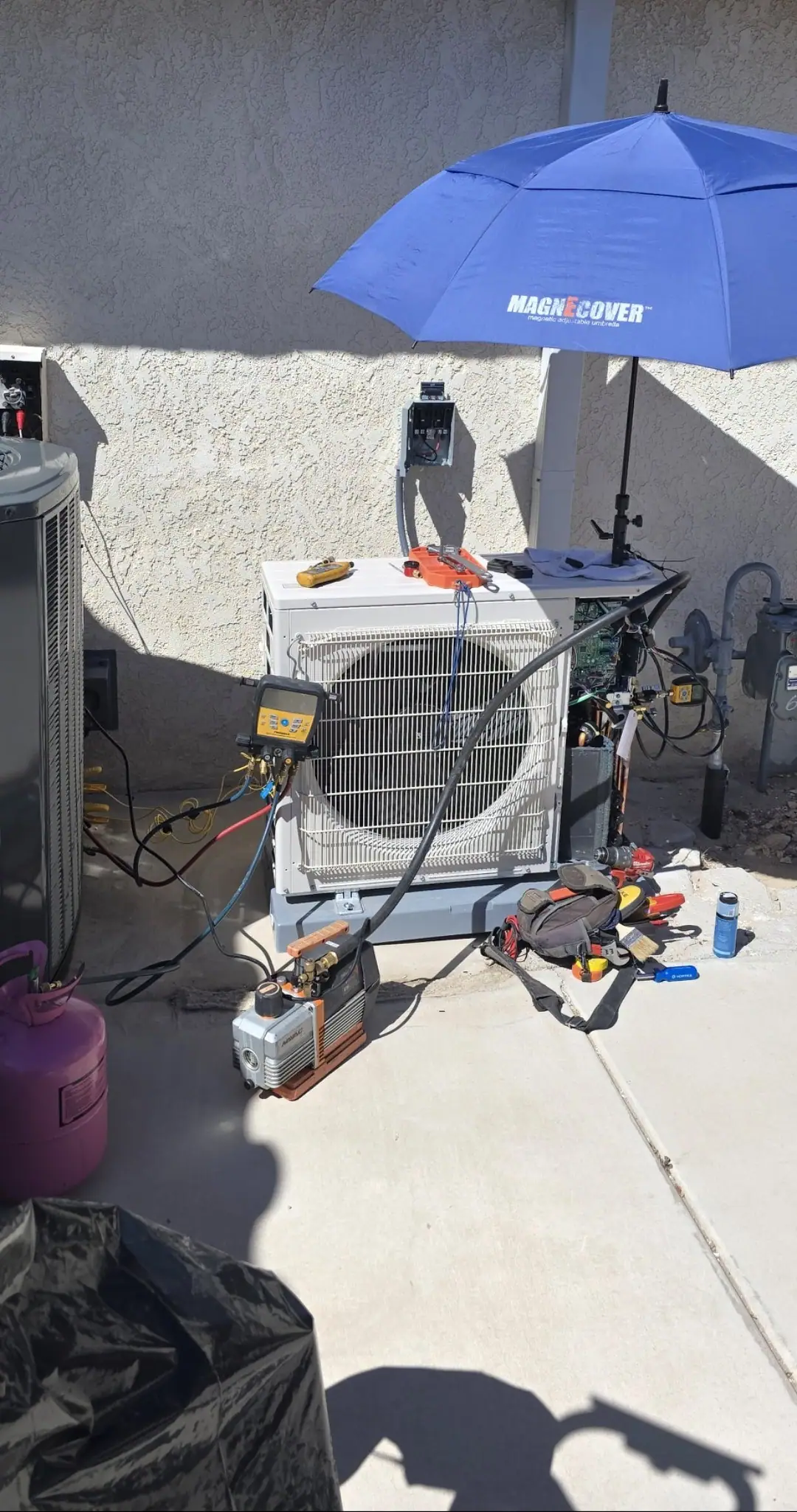
The style of indoor unit
Most people picture the wall unit that mounts high on the wall. It is the most common style and usually the simplest to install. ENERGY STAR notes that indoor units can be mounted on an interior wall or in the ceiling, and there are several options beyond the standard one:
- High wall units. The standard choice, mounted near the ceiling.
- Floor or low wall units. Sit near the floor like a radiator; good under windows and in rooms with sloped ceilings.
- Ceiling cassettes. Sit flush in the ceiling and blow in several directions. They need room above the ceiling and more work to install.
- Small ducted air handlers. Hide in a closet, attic or soffit and feed a few short ducts to nearby rooms.
The less visible the unit, the more it usually costs, because the equipment is pricier and the install takes more work. Many homes mix styles: wall units in the bedrooms and a ceiling cassette in the living room, where the look matters most.
What your house needs to take it
This is the part no website can price, because it depends on your walls, attic and electrical panel:
- Line routes. Short, straight runs from each indoor unit through an outside wall cost less than lines run through the attic to reach interior rooms or a second floor.
- Outdoor unit location. A pad on the ground or a bracket on the wall, with open air around it. ENERGY STAR advises avoiding tight spots, keeping it away from doors and windows and making it easy to reach for service.
- Drains. Every indoor unit makes water when it cools. A unit on an outside wall can drain by gravity; one on an inside wall may need a small pump.
- Electrical. The outdoor unit needs its own circuit. An older or full electrical panel may need work to make room for it.
- Wall finishes and access. Stucco, block and tile take more care to drill and seal than wood siding.
A good estimate names each of these. If one says nothing about the electrical work or the drains, ask, because those are the lines that turn into change orders later.
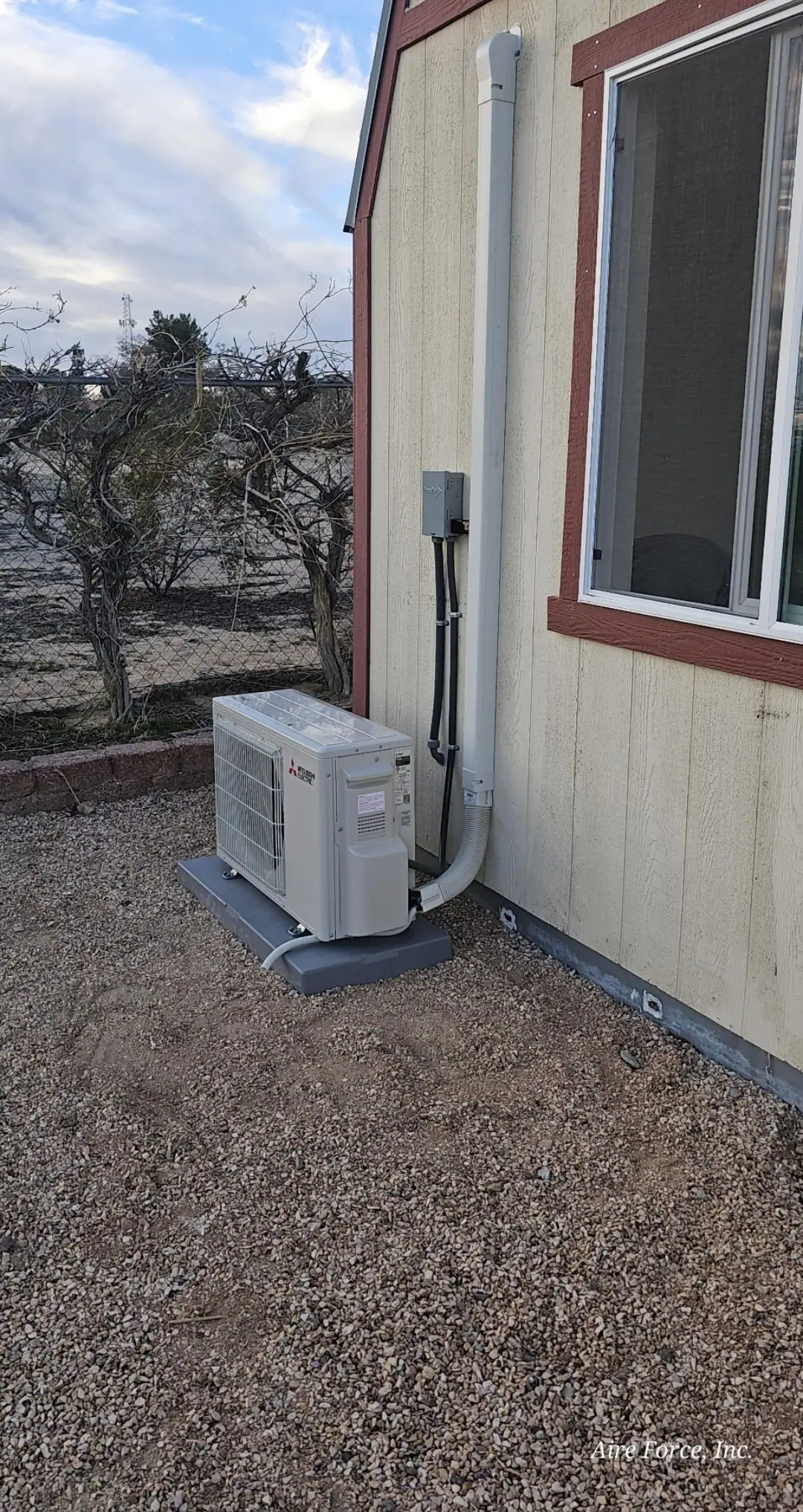
Permits, testing and rebates
Every mini-split install in California needs a permit and an independent test by a rater, and CHEERS says a contractor who skips them is breaking the law. The permit fee and the test are real costs, and an estimate that leaves them out is not cheaper; it is either incomplete or planning to skip them. Our guide to HVAC permits in Palmdale and Lancaster explains who issues them and what the test checks.
Rebates used to take a big bite out of the cost. Most of them are gone in 2026: the federal heat pump tax credit does not cover equipment placed in service after December 31, 2025 (IRS), and the big state rebates for single-family homes are fully reserved. Our post on heat pump rebates in Palmdale covers what is left and what may come back.
Over the life of the system, running cost matters as much as the install. A ductless system avoids the duct losses that ENERGY STAR puts at 20 to 30 percent in a typical house, which is part of the case for one in homes with old ducts in a hot attic.
The costs you live with after the install
The install is a one-time cost. Running, upkeep and the life of the system are the costs you live with, and they belong in the comparison too.
- Running cost. Set by the efficiency ratings, the size, how many rooms you run and your electric rate plan. A system sized right and rated well costs less every month.
- Filters and cleaning. Each indoor unit has a washable filter; ENERGY STAR says to clean it when it looks dirty or the filter light comes on. The coil and blower inside need a deeper cleaning every so often, and the valley’s dust makes that more frequent.
- Maintenance visits. ENERGY STAR’s checklist recommends a cooling check in the spring and a heating check in the fall.
- Warranty. Many manufacturers require the equipment to be registered after the install to get the full parts warranty. Ask who does that and keep the confirmation.
Lifespan ties it together. ENERGY STAR treats a heat pump or air conditioner more than 10 years old as a candidate for replacement, so a system that is installed well and maintained gives you more good years before you face the decision again.
When you compare two quotes, a slightly higher price for better efficiency, a cleaner install or a longer warranty can be the cheaper choice over the life of the system. The cheapest install is not always the cheapest system to own.
How to compare mini-split quotes
Ask each contractor for a written estimate that lists the same things, so you compare like with like:
- How the size of each unit was worked out, ideally a load calculation
- The exact model numbers of the outdoor and every indoor unit
- The AHRI certificate number for the matched system
- Where each indoor unit, the outdoor unit and the lines will go
- Line covers outside, and how the wall openings are sealed
- Drains, and any pumps needed
- Electrical work, including any panel changes
- The permit and the rater test
- Warranty terms, and who registers the equipment
If two quotes differ a lot, the list usually shows why: one has fewer zones, smaller units, a lower efficiency rating or no permit. At a free in-home consultation, a factory-trained technician from Aire Force walks the house with you and goes over every detail before any work begins. We install ductless mini-splits and multi-zone systems across Palmdale, Lancaster and the Antelope Valley.
Questions people also ask
Is a mini-split cheaper to run than central air?
Often, in homes with leaky ducts in a hot attic, because a mini-split avoids duct losses and runs only the rooms in use. In a house with tight, well-insulated ducts, the gap is smaller. Efficiency ratings and how you use it matter most.
Does a bigger outdoor unit cost more to run?
Not by itself. A variable-speed outdoor unit runs only as hard as the rooms need. What raises the bill is a system sized too large or too small for the house.
Can I install one zone now and add more later?
Yes, if the outdoor unit is chosen with spare connections and capacity, or by adding a second system later. Say so at the consultation so the first install leaves room for it.