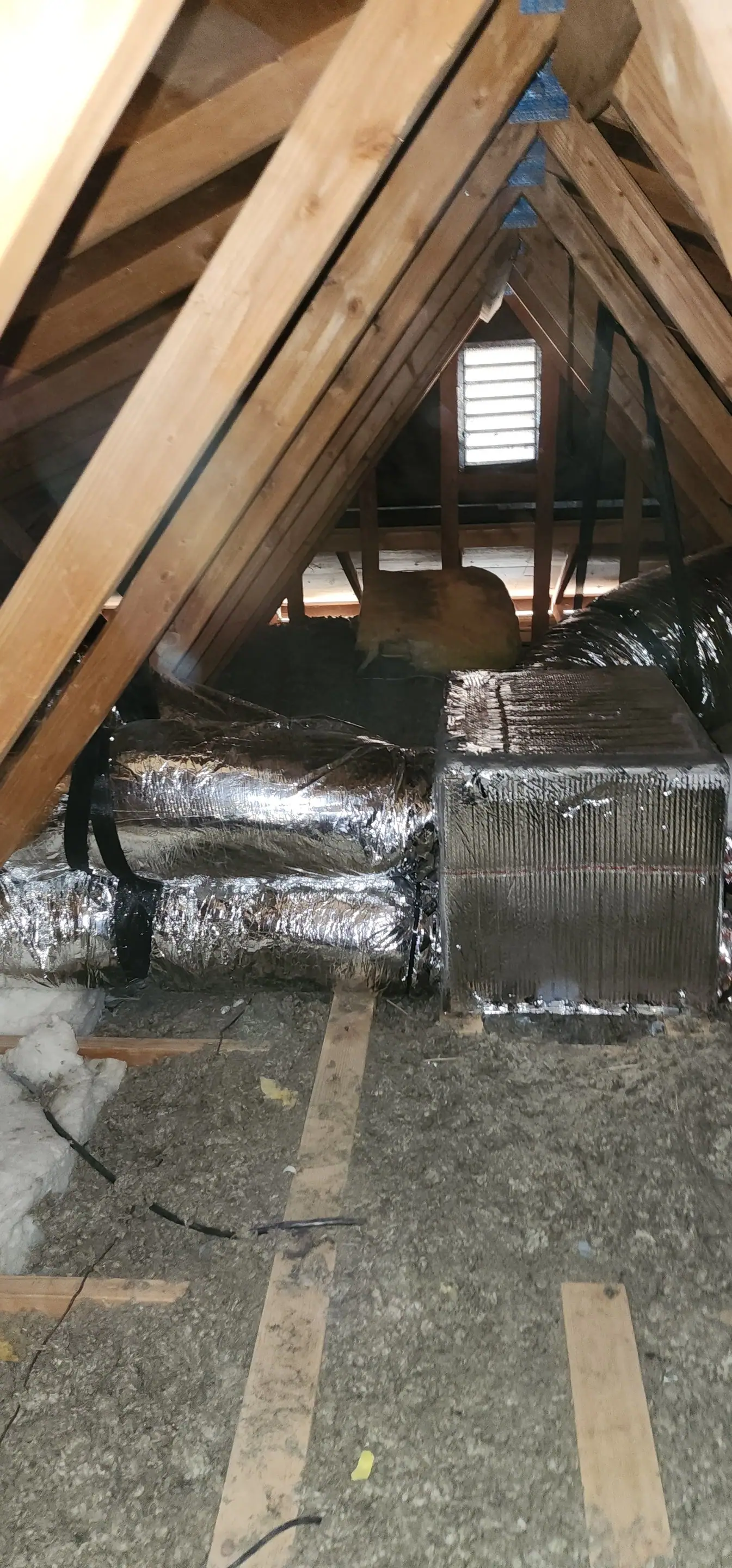
What goes wrong with ducts
Ducts fail in a handful of ways, and each shows up a little differently in the house:
| Problem | What you notice |
|---|---|
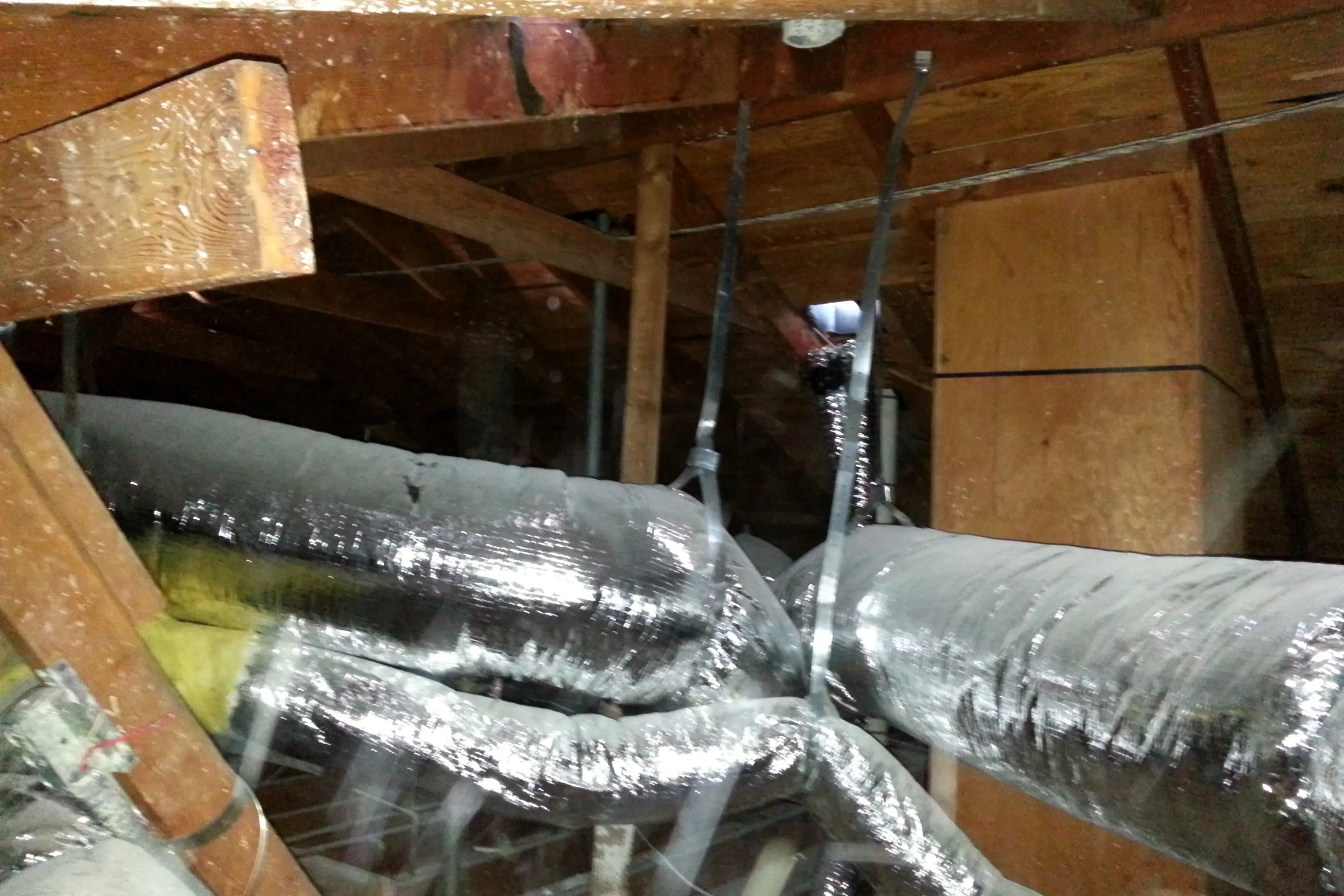
| A run pulled loose from its boot or the plenum | A vent that puts out little or nothing; the attic gets that room’s air |
| Crushed, kinked or sagging flex duct | Weak air at one or two vents, sometimes a whistle |
| Leaky joints and seams | Higher bills and rooms that never quite get there |
| A leak on the return side | Dust in the house and air that feels hot or musty when the system starts |
| Torn jacket or insulation | Ducts that heat up in the attic, so the air arrives warmer than it left |
| Damage from rodents or foot traffic | Holes and flattened runs, often found during other attic work |
Why leaks cost more in a desert attic
Return leaks are the sneaky kind. The return side runs under suction, so a gap there pulls air in from wherever the duct runs: attic heat in the summer, cold in the winter, and dust and insulation fibers all year. In a place as dusty as the Antelope Valley, a filter that clogs unusually fast can be a sign of exactly that.
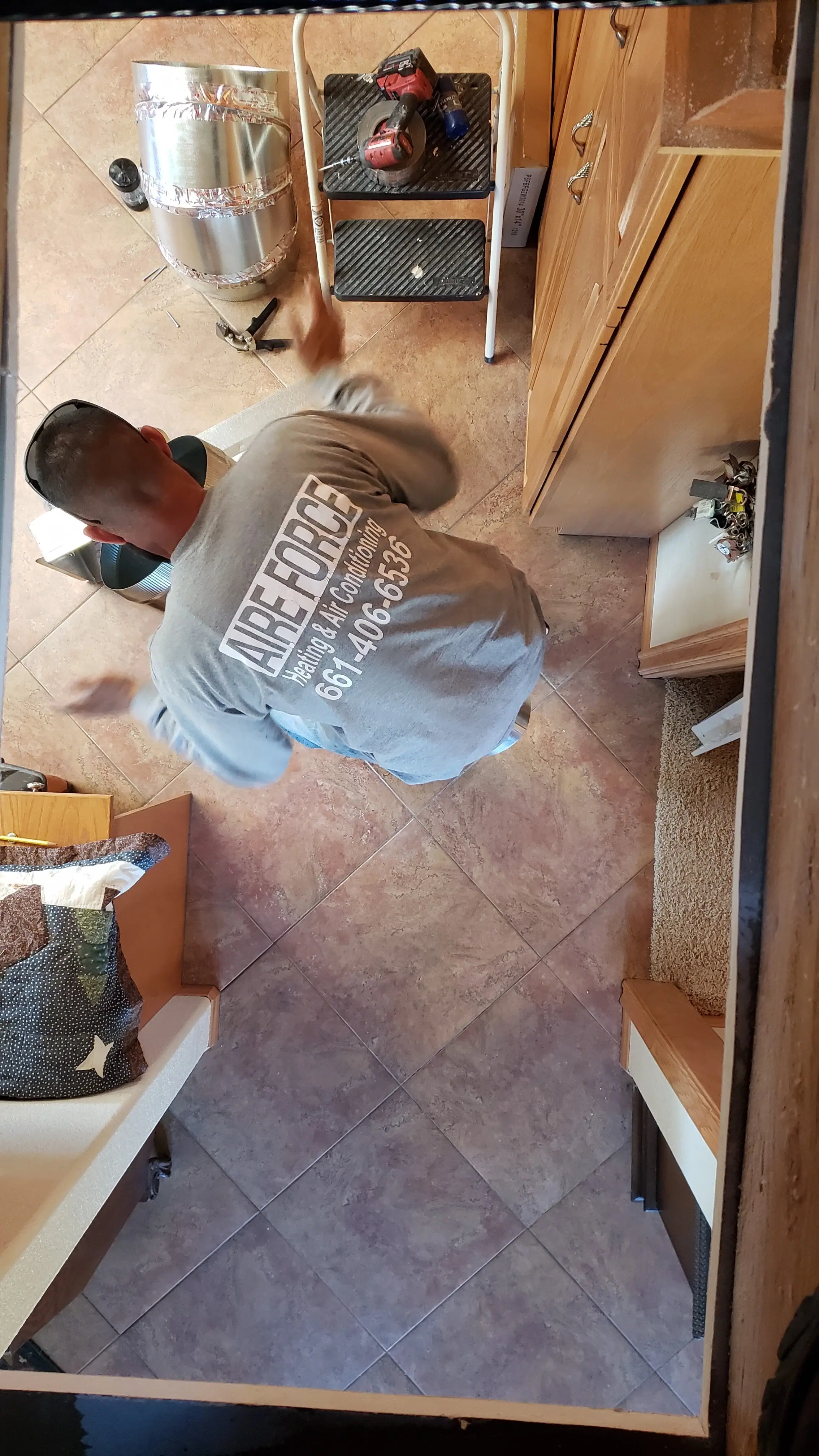
How ducts get fixed
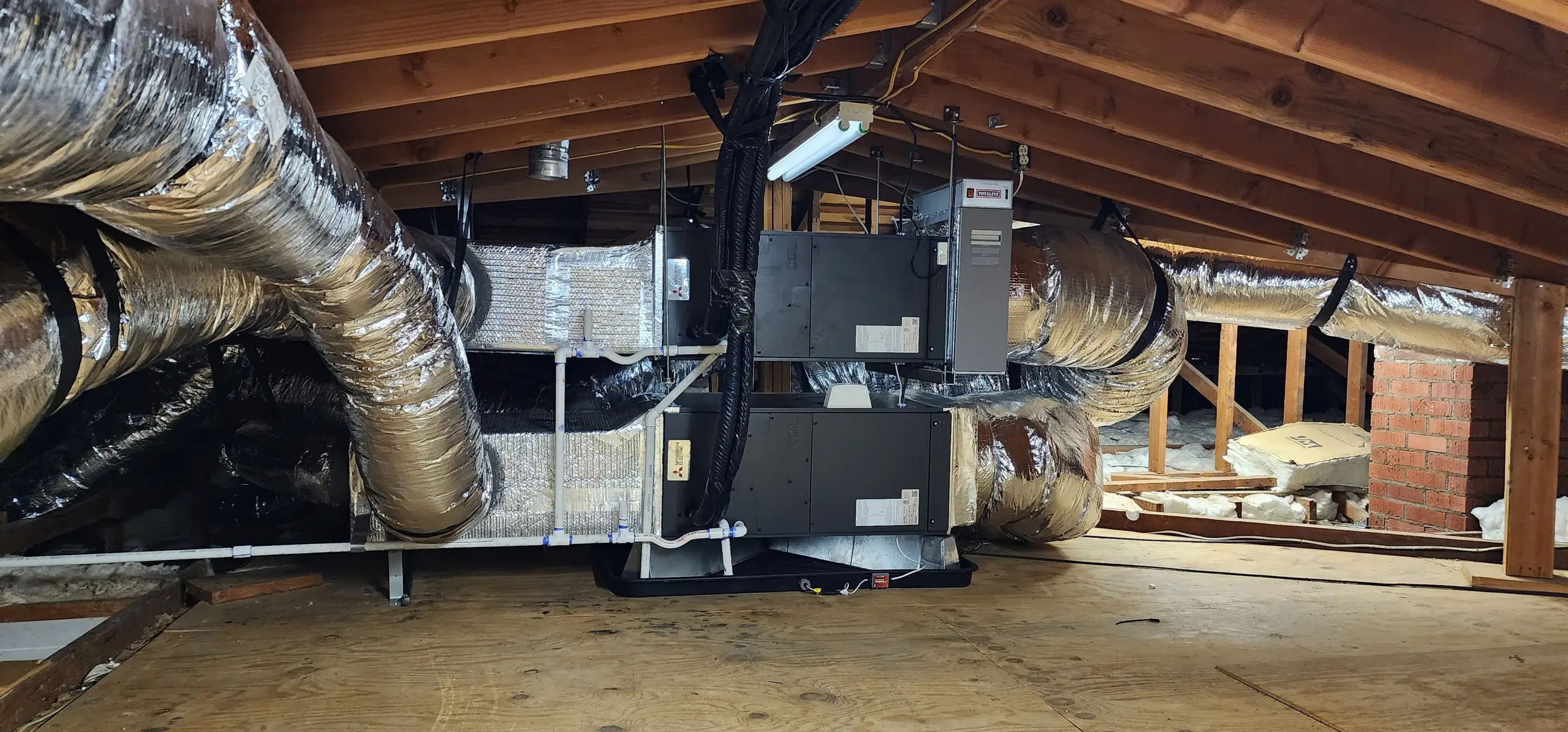
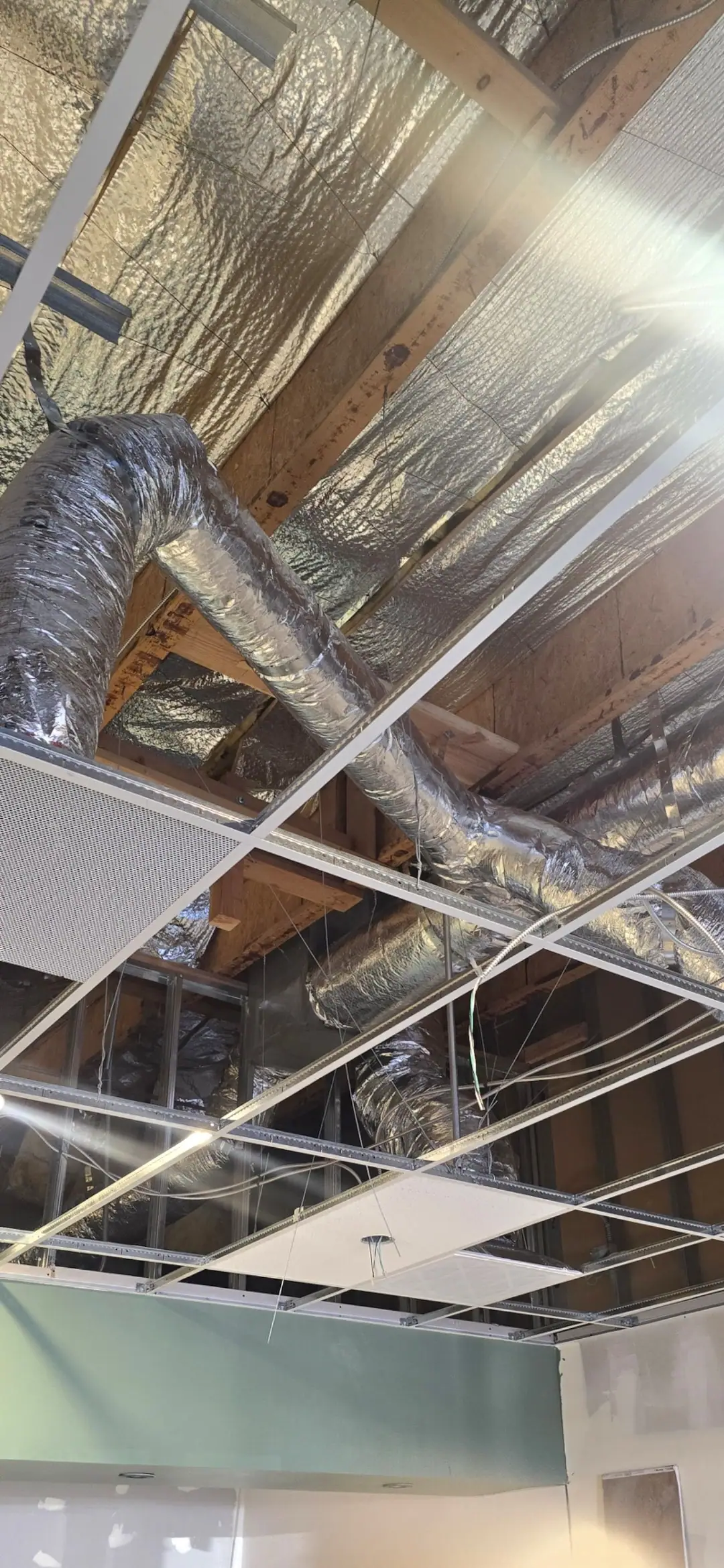
Most duct repairs are hands-on work in the attic. A loose run gets reattached to its collar and strapped so it stays; crushed or kinked flex gets straightened and properly supported, or replaced if it won’t recover; and leaky joints get sealed with mastic or metal tape. ENERGY STAR is blunt about cloth duct tape: never use it, because it doesn’t last.
Leaks you can’t reach, inside walls or under floors, can be sealed from the inside with an injected sealant that is blown through the ducts and builds up at the gaps. The Building America Solution Center describes it as an effective way to cut duct leakage when it is combined with sealing by hand.
Repair or replace the ductwork
If the ducts are mostly sound, repair is the better value: seal what leaks, fix what is loose or crushed, and test the result. When the runs are brittle, torn throughout or laid out badly enough that rooms never got the right air to begin with, patching just buys time.
Under California’s 2025 Energy Code, replacing more than 25 feet of duct counts as new ductwork, with R-8 insulation in the attic in climate zone 14 and the sealing rules that come with it. Our duct and vent installation page covers what a replacement involves.
Testing that proves the leaks are fixed
Sealing is measured, not eyeballed. When a duct system is tested under the Energy Code, an independent rater pressurizes it and measures the leakage, and the 2025 standards cap it at 10 percent of the system’s airflow, or 7 percent to the outside. If a system can’t get there, every accessible leak has to be sealed and checked by eye and with a smoke test.
The rules exempt duct systems with less than 40 feet of duct, systems already sealed and tested, and older ducts built, insulated or sealed with asbestos. If you suspect asbestos on old duct wrap or tape, the EPA says the best thing is usually to leave it alone if it is in good condition and not to sample it yourself.
Vents, grilles and the rooms they serve
Some airflow problems are at the vent end. A register with its damper stuck half closed, a grille buried behind furniture or a return blocked by a rug can make a room feel like it has a duct problem. Those are easy fixes, and worth checking before anything else.
Shutting vents in empty rooms usually doesn’t save what people expect, because the air still has to go somewhere and the pressure rises in the rest of the ducts, which pushes more air out through the leaks. If a room is unused, the better fix is a system or a zone that can actually turn it down. Our AC repair page covers the equipment side when the ducts check out.