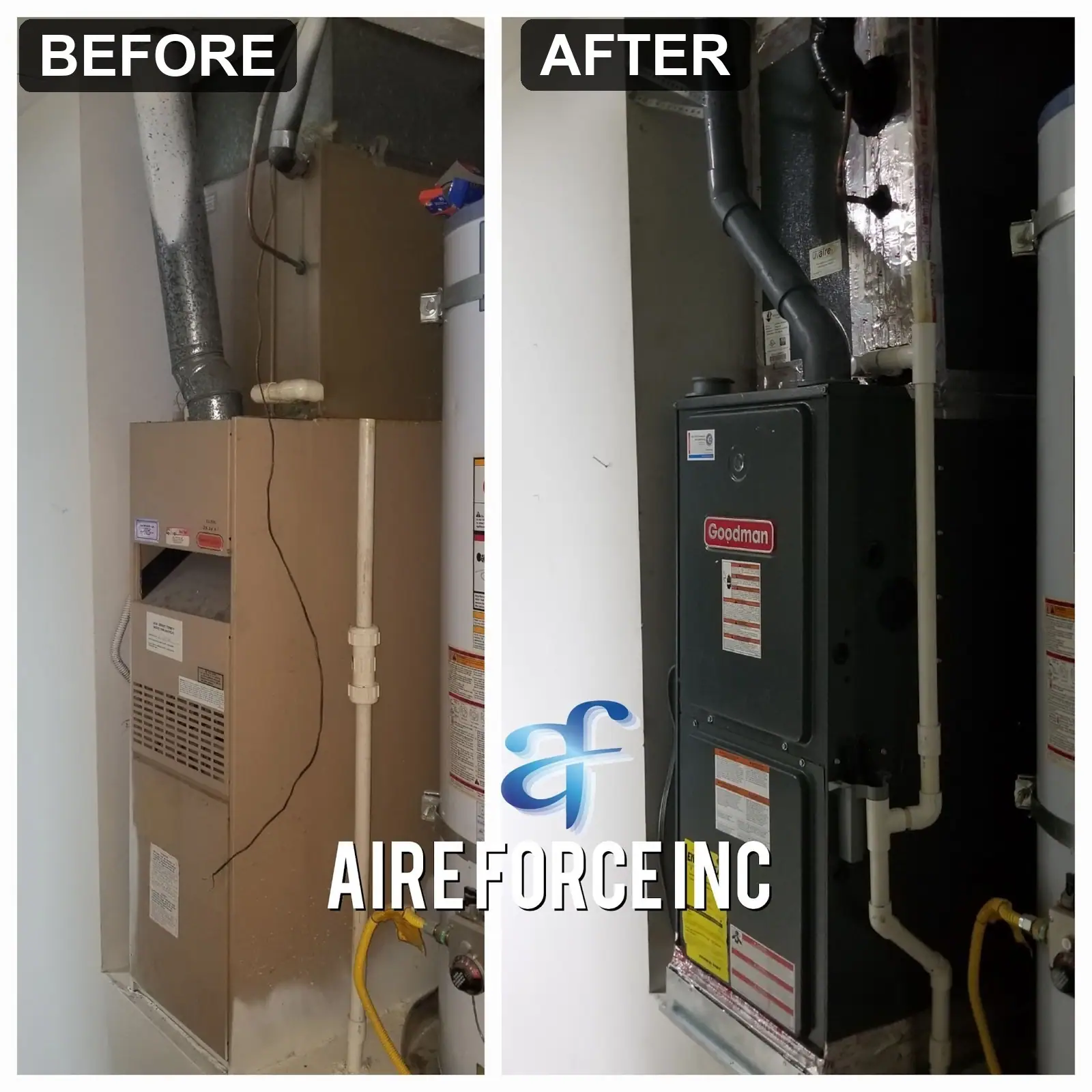
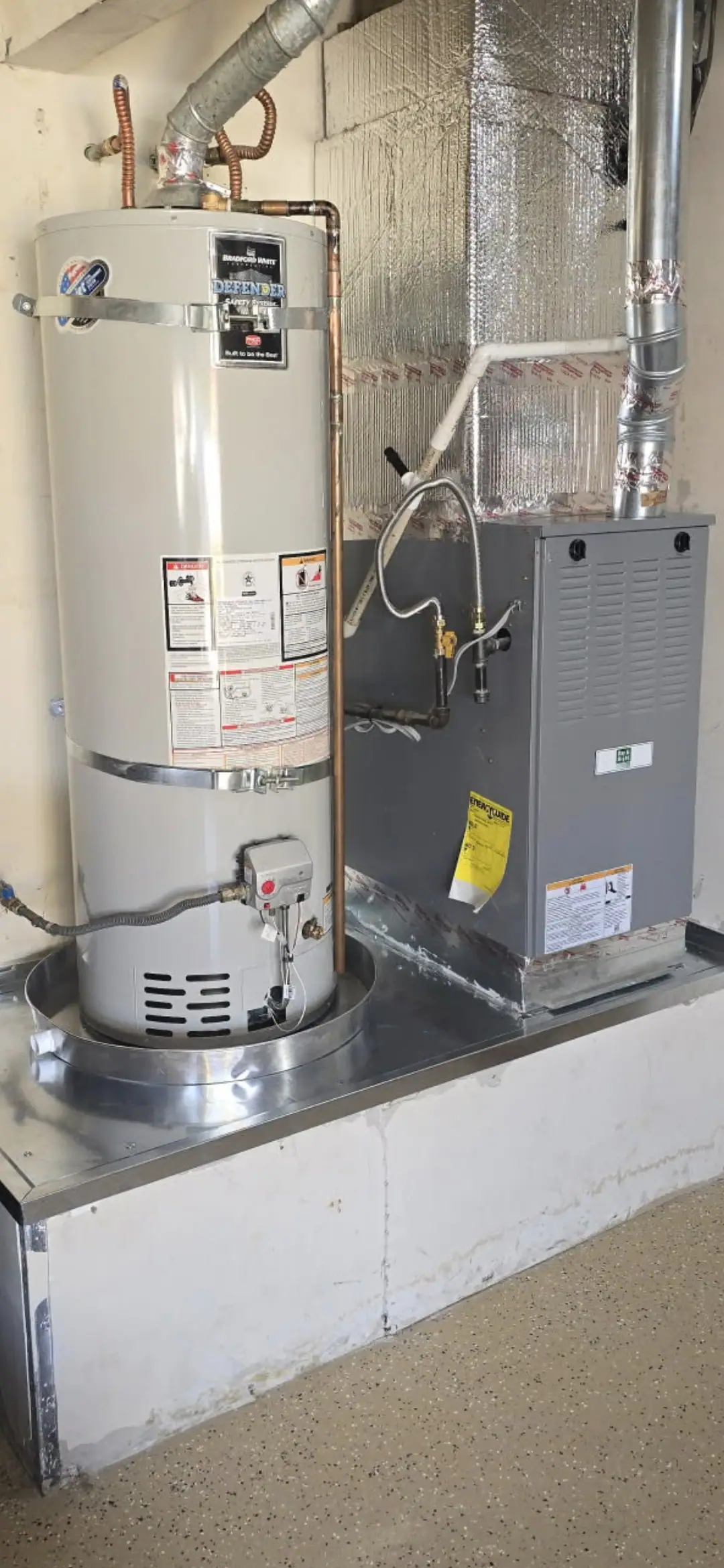
When it’s time to replace a furnace
A furnace can run for a long time, but the signs that it is near the end are easy to spot:
- It is past 15 years. ENERGY STAR treats a furnace older than that as a candidate for replacement, more so with frequent repairs and rising bills.
- The repairs are getting bigger. An igniter or a flame sensor is routine. A failed inducer motor, control board and blower in the same few winters is a pattern.
- The flame looks wrong. A burner flame should be steady and blue. Yellow, lazy or flickering flames mean poor combustion; turn it off and call.
- Some rooms never warm up. That can be the furnace, the ducts or both, and a replacement is the time to find out which.
- It is loud or it smells. Rattles, booms on start-up or a burning smell after the first few minutes of the season deserve a look.
A furnace that is safe and running is not an emergency. Replacing it in spring or summer gives you time to weigh the options instead of taking the first one that can go in before the cold.
Gas furnace, heat pump or both
Valley homes heat a few different ways, and each one has its place:
| System | How it heats | Often a good fit when |
|---|---|---|
| Gas furnace | Burns natural gas and blows the heat through the ducts | You have gas, sound ducts and a newer air conditioner to pair it with |
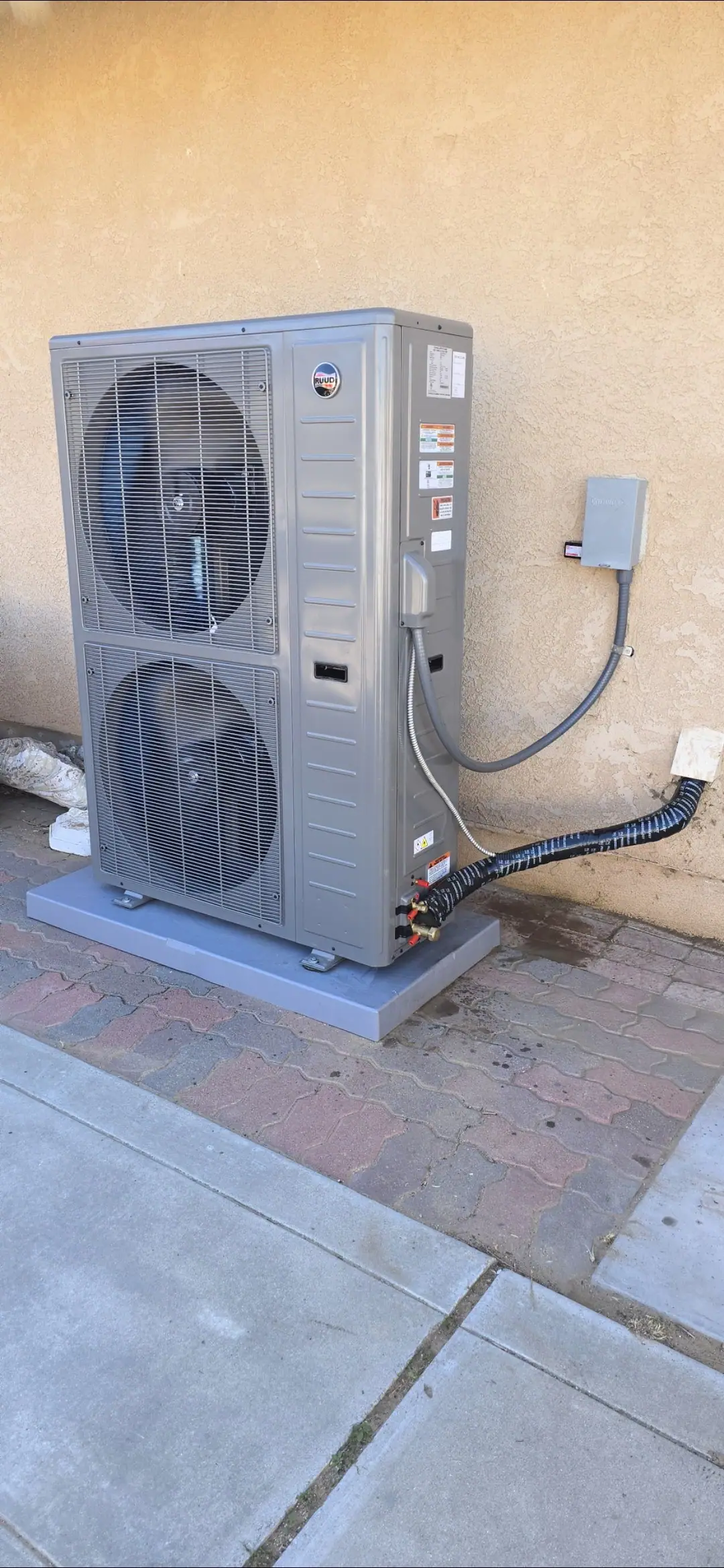
| Heat pump | Moves heat in from the outside air; the same unit cools in summer | The AC is old too, or you want one system for both seasons |
| Heat pump with a furnace backup | The heat pump does most of the heating; the furnace covers the coldest mornings | You want lower heating bills and still want gas heat on hand |
| Propane furnace | A furnace fed from a propane tank | The house is out past the gas lines |
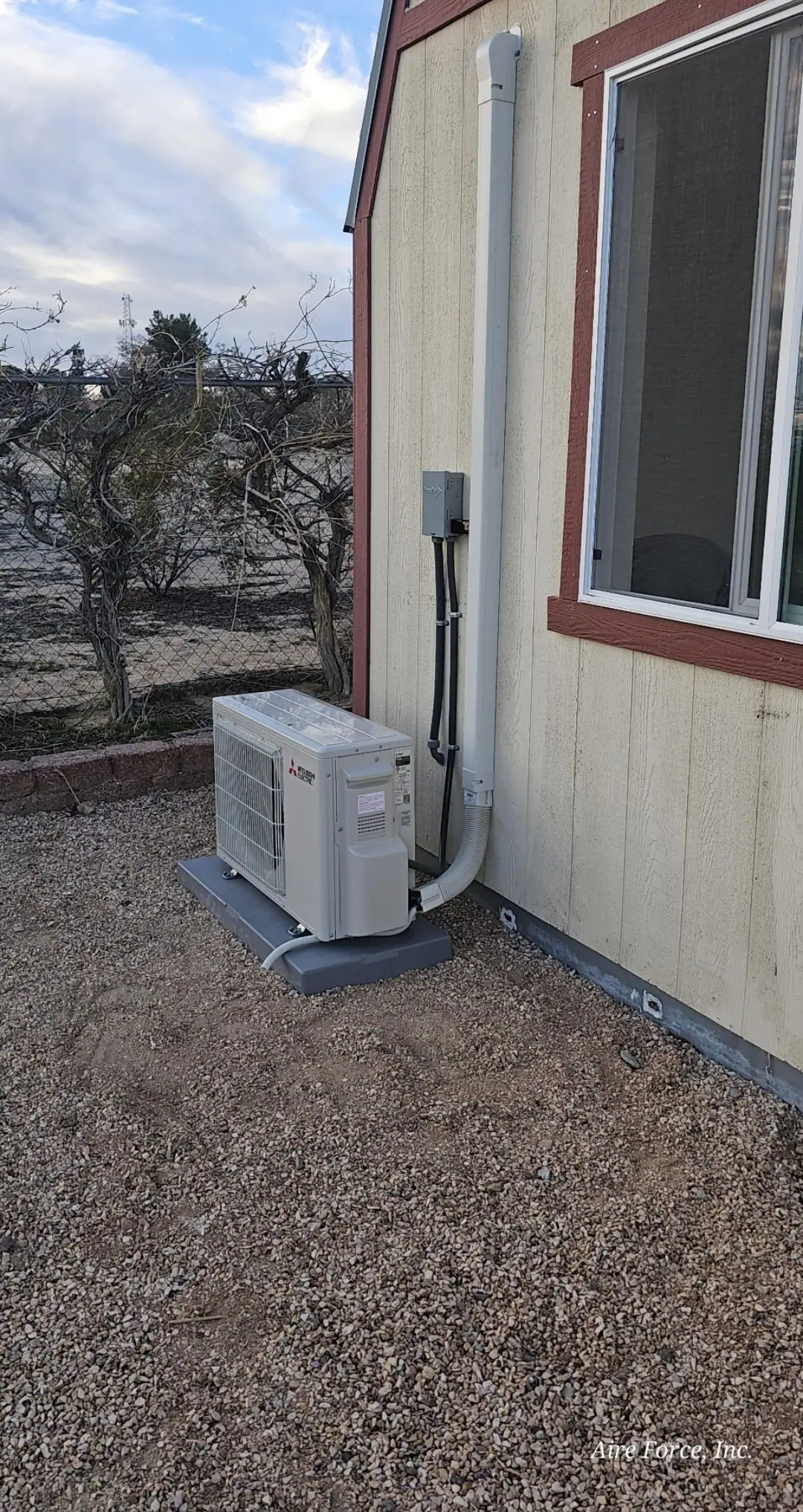
| Ductless heat | Mini-splits heat room by room | No ducts, or rooms the central system never warms |
Homes out past the gas lines, like many in Acton, are where the propane and heat pump question comes up most. Our guide to mini-split heating in a valley winter covers how heat pumps handle the cold.
Furnace efficiency: 80 percent or 90-plus
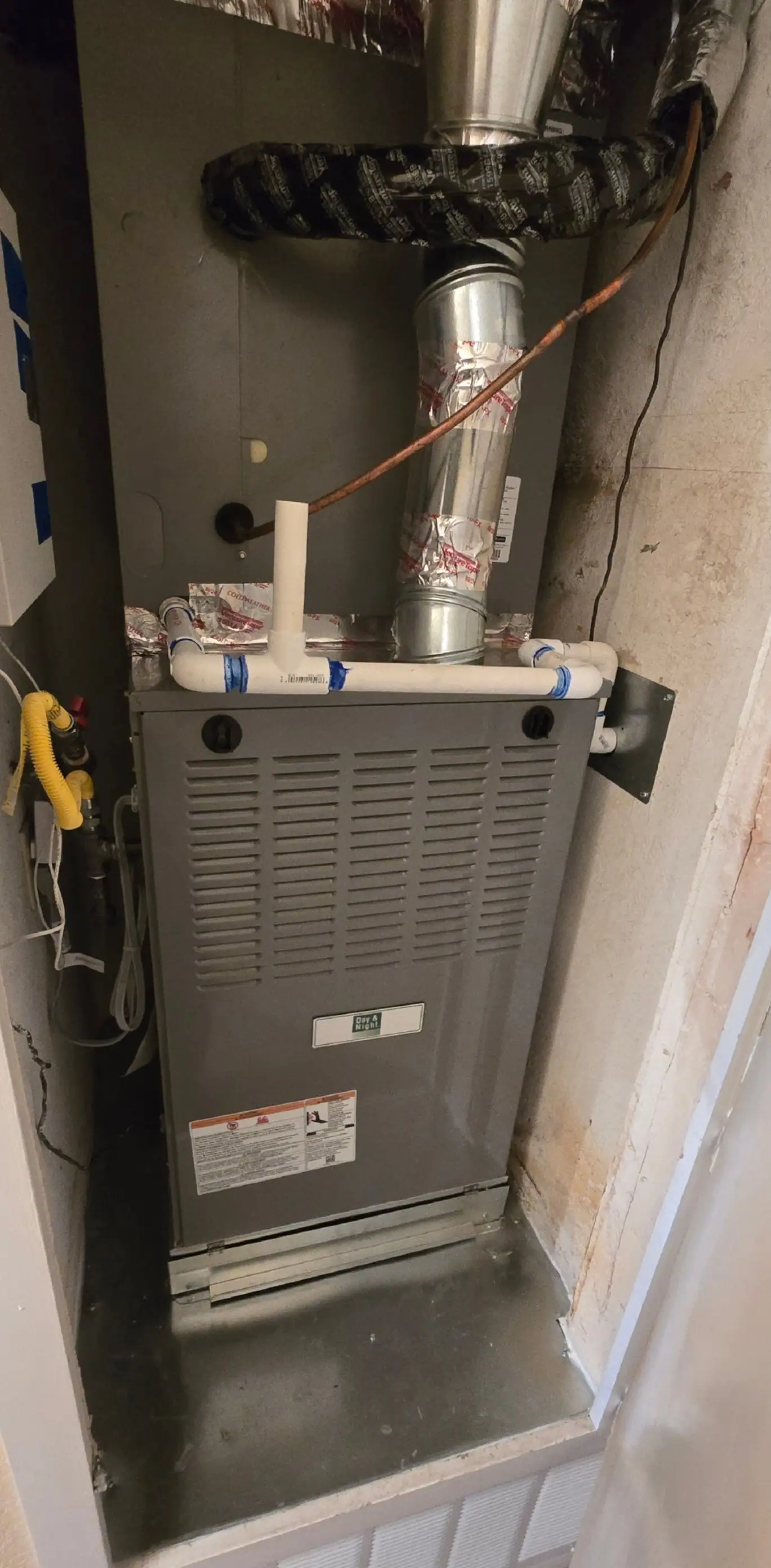
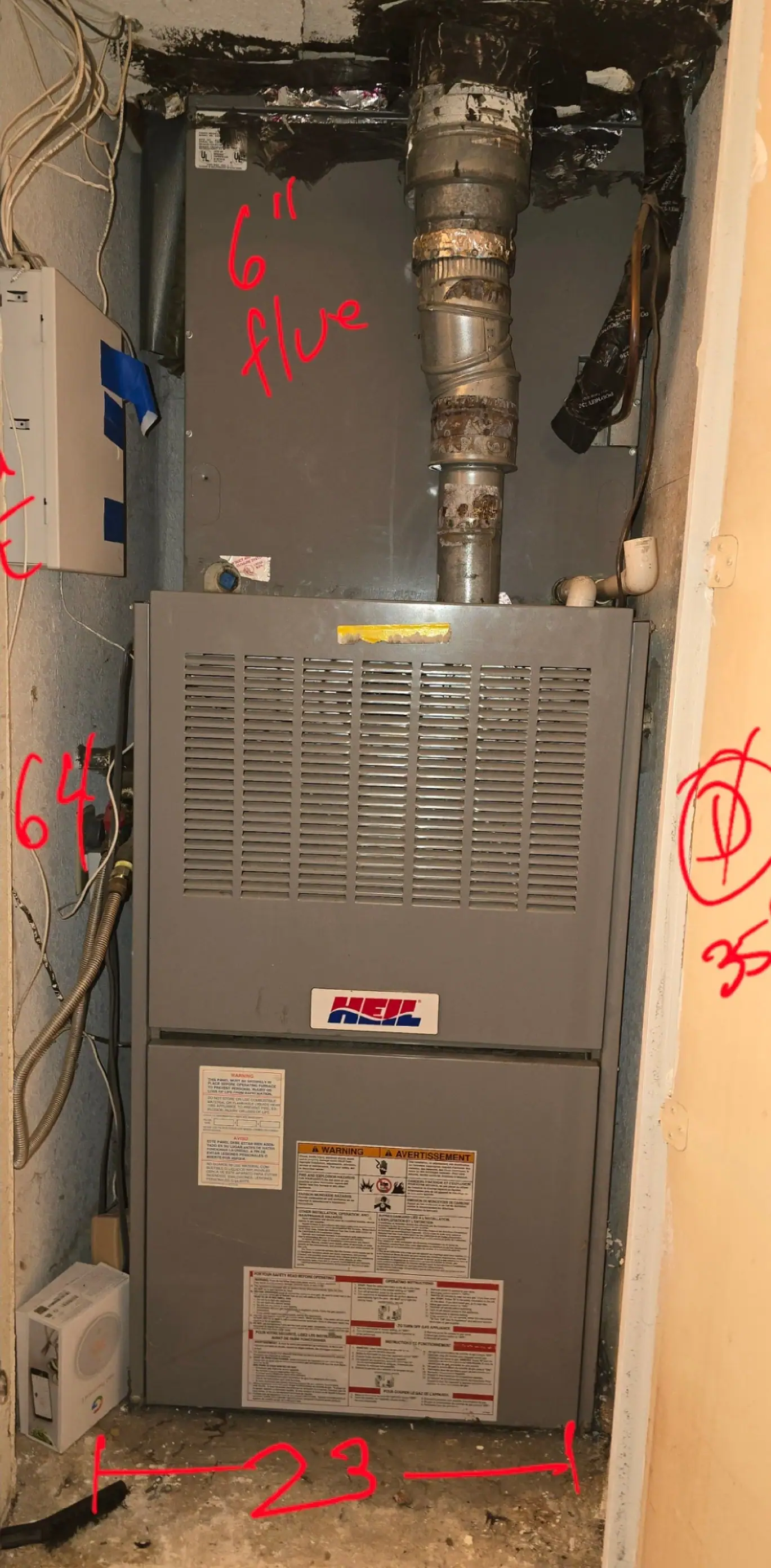
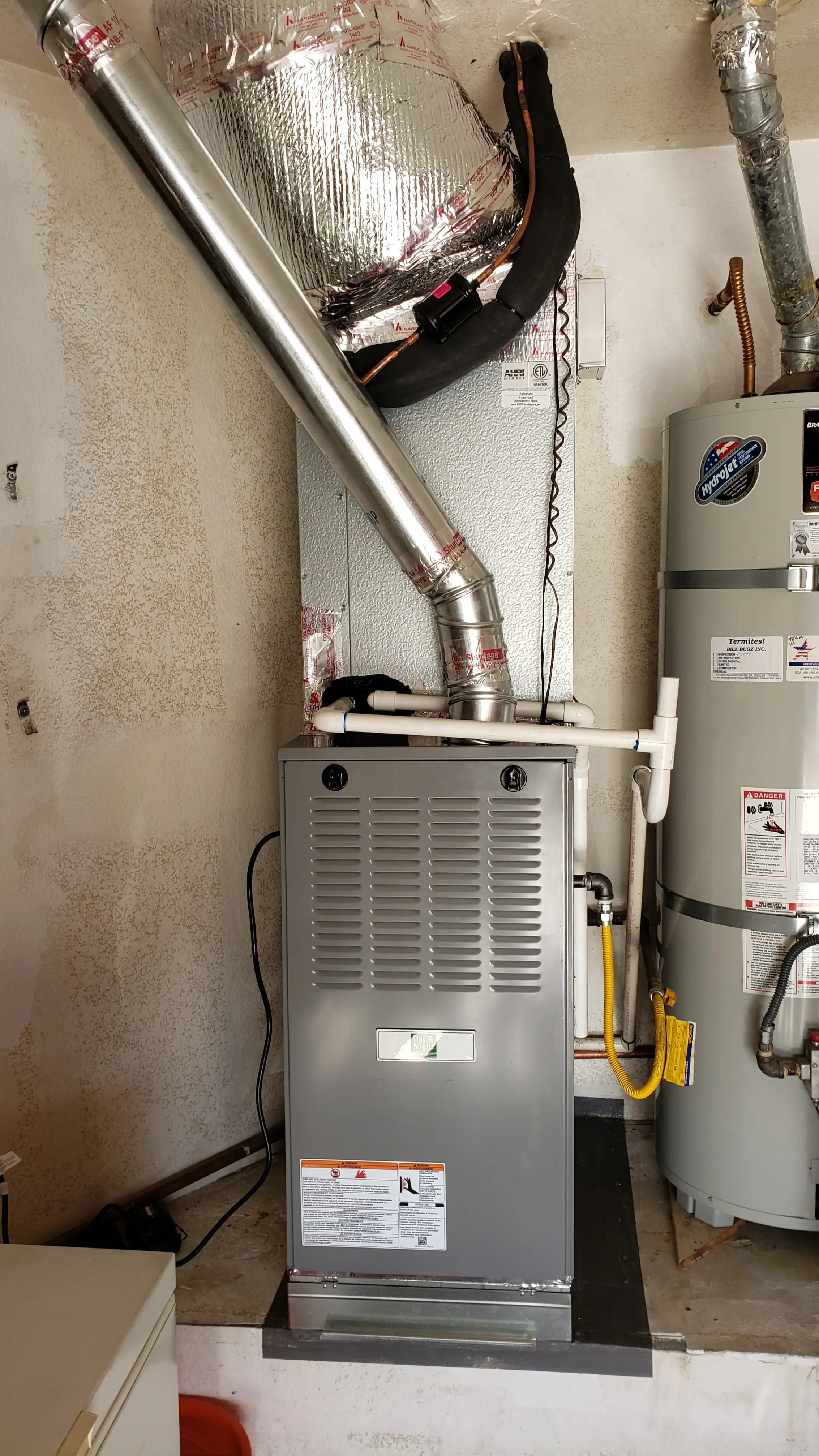
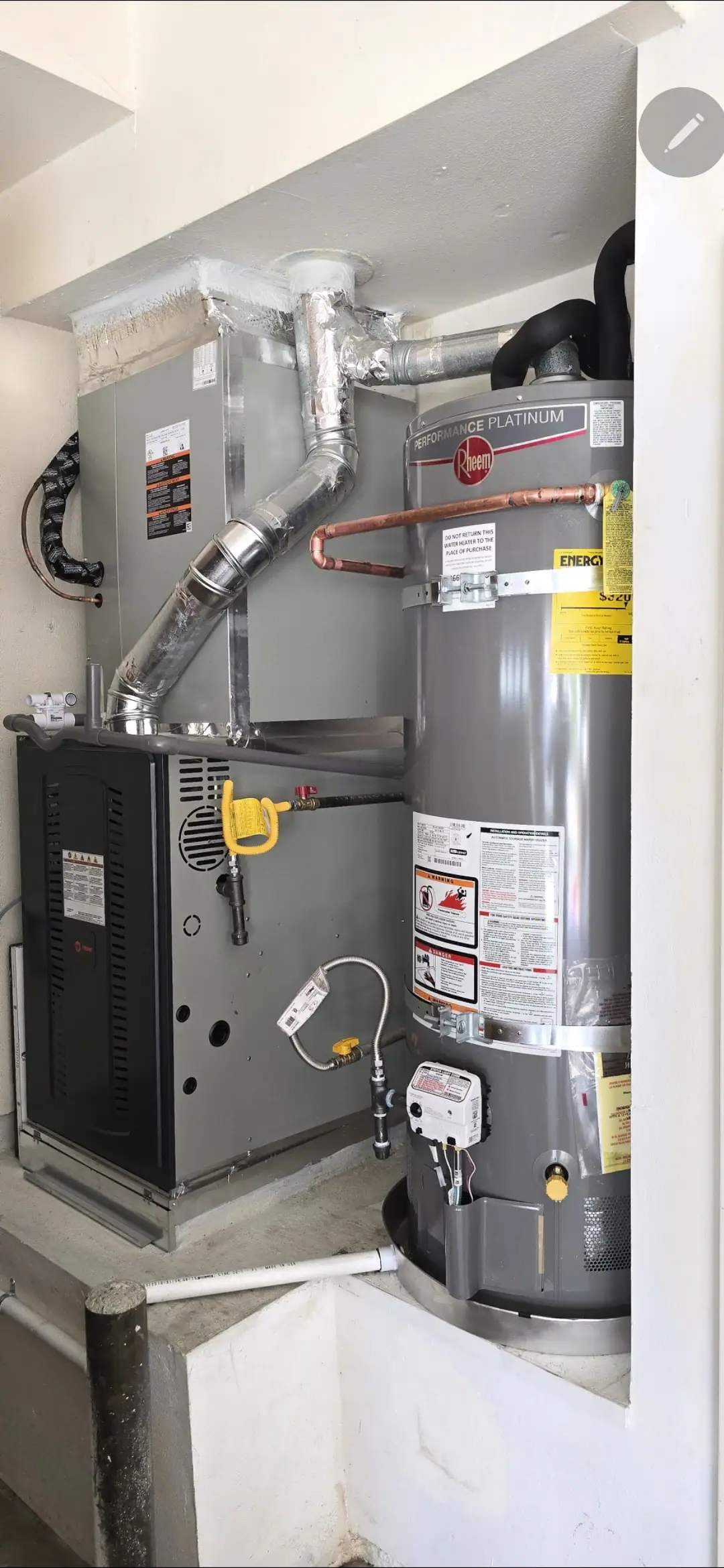
A furnace’s AFUE rating is the share of the fuel that ends up as heat in the house. A standard furnace is about 80 percent: the rest leaves as hot exhaust through a metal flue, like the one rising from most closet furnaces. A condensing furnace rated 90 percent or more pulls so much heat out of the exhaust that it comes out cool and wet, so it vents through plastic pipe and needs a drain for the water it makes.
That difference shapes the job. Moving from an 80 percent furnace to a 90-plus one means a new vent route to the outside, often two pipes, and a place for the condensate to go, which is easy in some closets and attics and hard in others. ENERGY STAR certifies higher-efficiency gas furnaces and notes they also use more efficient blower motors. In a valley where the furnace works hard only part of the year, the payback on the top models depends on how much you heat.
Sized for 34-degree nights
An oversized furnace heats in short, loud bursts and leaves the rooms far from the thermostat behind. A heat pump has its own sizing question: at what outdoor temperature it stops keeping up, and what covers the rest, whether electric backup heat or a furnace. The NEEP cold climate heat pump list shows each model’s heating output at low temperatures, which is how that question gets answered on paper.
Gas lines, venting and carbon monoxide
A gas furnace install is also gas and venting work. The gas line has to be big enough for the new furnace, the vent has to be the right type and size and run the right way to the outside, and the furnace needs enough air to burn cleanly. These are the parts of a furnace job that matter most for safety, and the parts an inspector looks at closely.
California law requires a carbon monoxide alarm in every home with a fuel-burning heater or appliance, a fireplace or an attached garage, and the state’s building code has them put in when a permit is issued for work over $1,000 on an existing home. A furnace replacement is a good time to check yours. The EPA lists leaking furnaces among the indoor sources of carbon monoxide.
Permits and testing for a new heating system
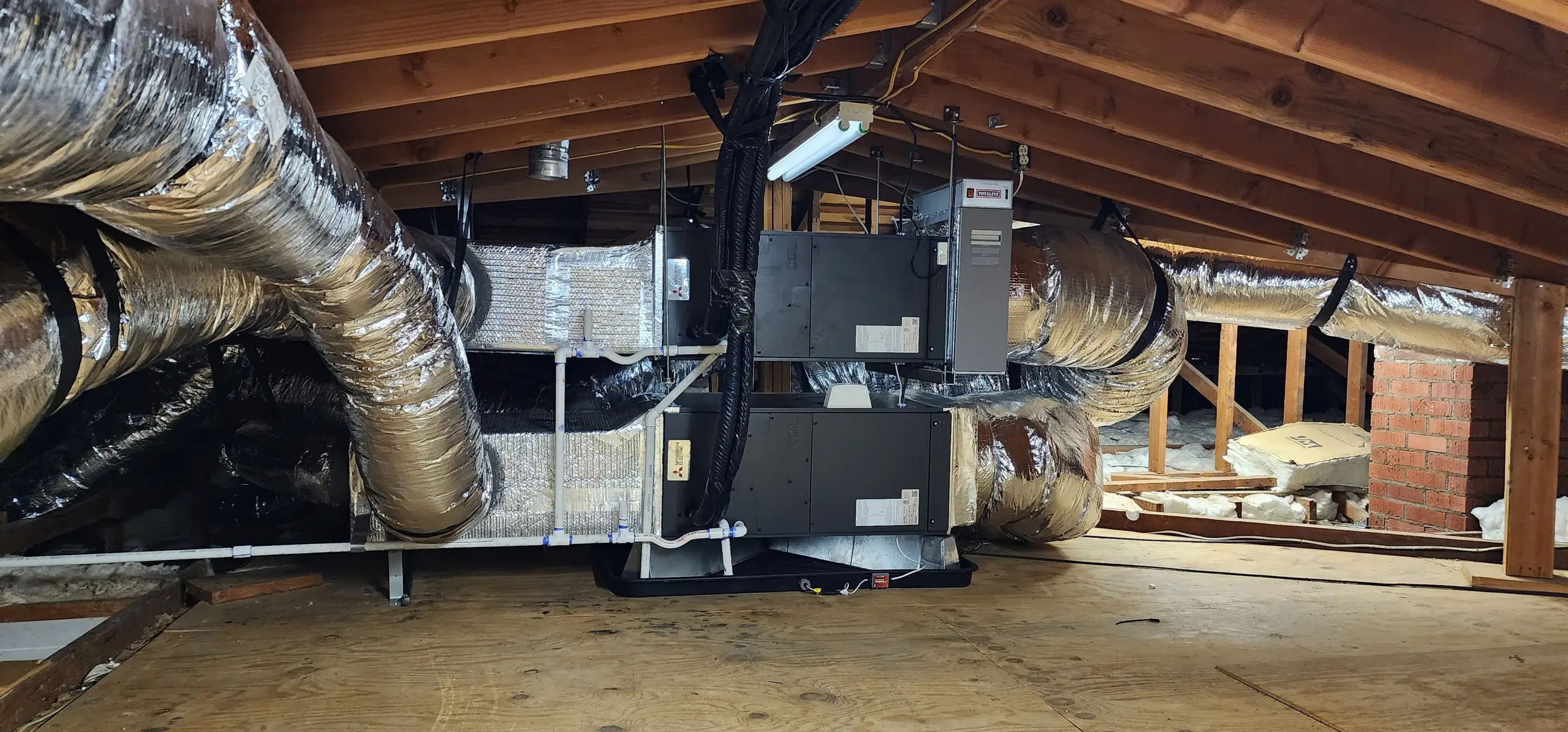
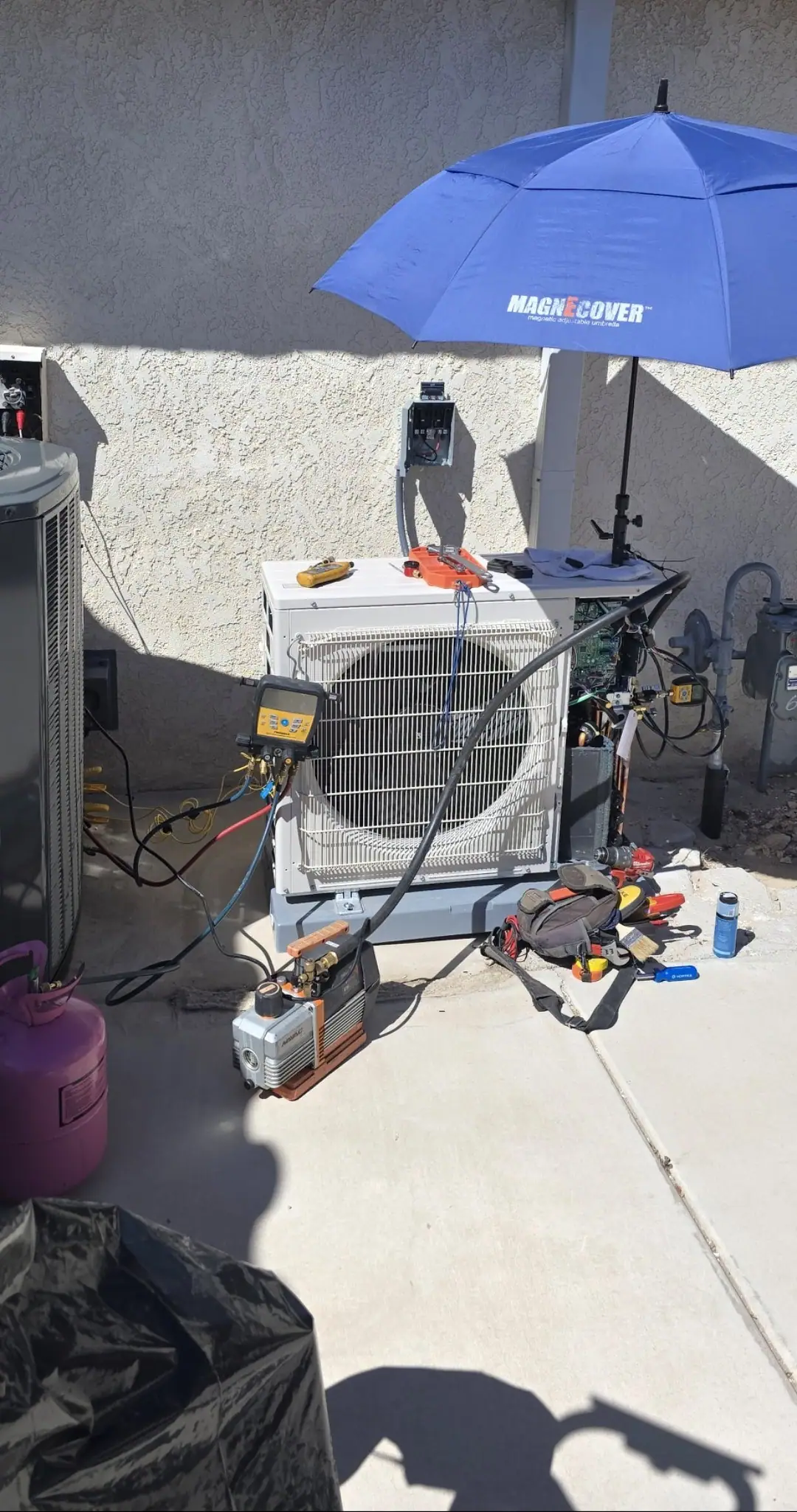
Replacing a furnace or heat pump needs a permit, from the city in Palmdale and Lancaster and from Los Angeles County in Quartz Hill, Acton and Littlerock. Under the 2025 Energy Code, replacing the air handler, which on a gas system is the furnace itself, also brings in a duct leakage test unless the ducts were sealed and tested before or the system has less than 40 feet of duct. A heat pump also gets its refrigerant charge verified by an independent rater.
Our guide to HVAC permits in Palmdale and Lancaster walks through who issues the permit and what the rater checks, and our post on heat pump rebates in Palmdale tracks the programs that are left. For the cooling half of a new system, see AC installation.