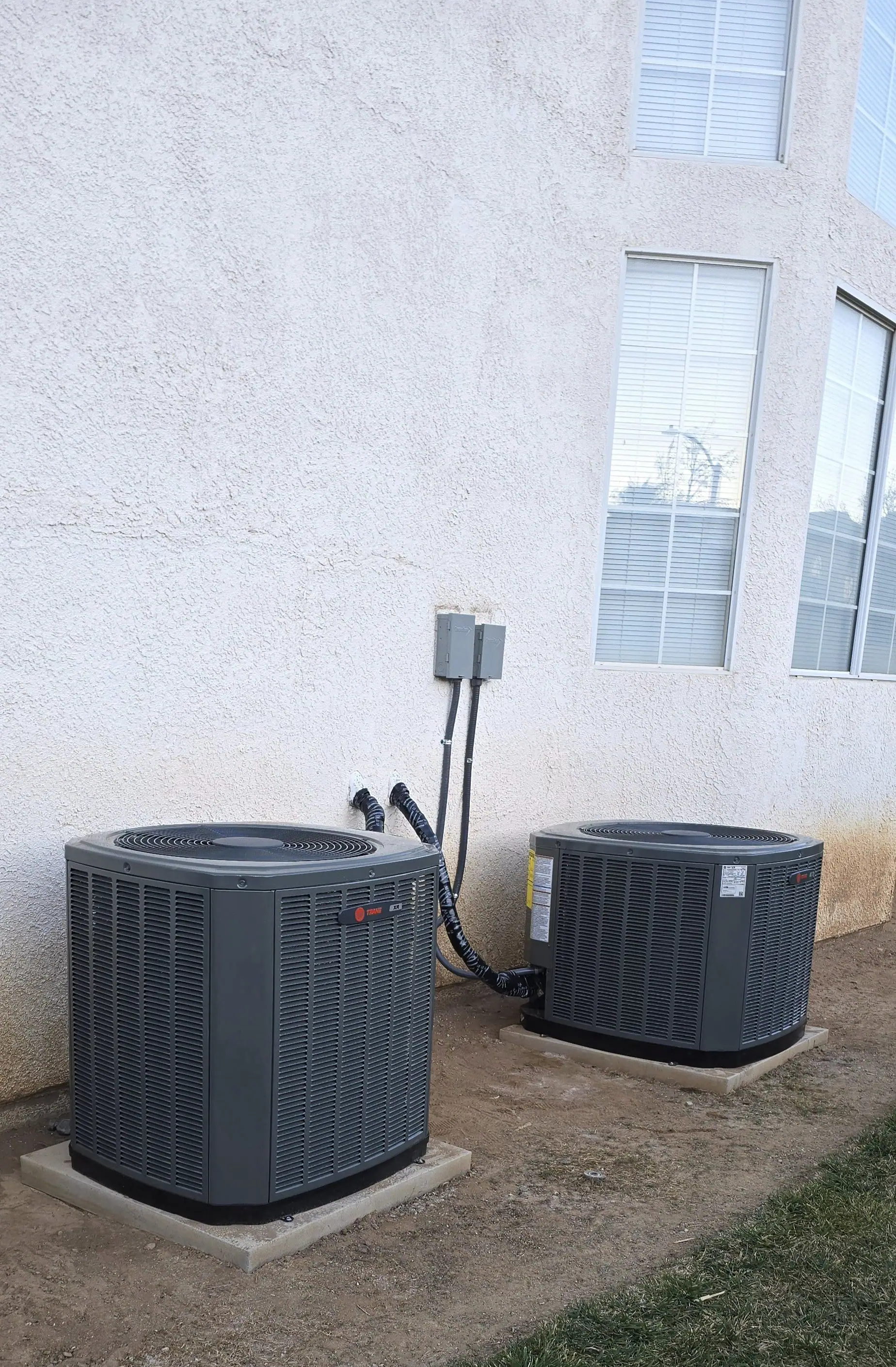
Signs your air conditioner is due for replacement
No single sign settles it, but several together usually do:
- It is more than 10 years old. ENERGY STAR treats an air conditioner or heat pump past 10 years as a candidate for replacement, especially when other signs on this list show up too.
- Something breaks every summer. One repair is normal. A system that needs a capacitor one year, a fan motor the next and a refrigerant leak after that is telling you where it is headed.
- It still runs on R-22. That refrigerant is no longer made, so a leak on an R-22 system gets more expensive to chase each year.
- The house never evens out. Rooms that stay several degrees warmer than the rest often point to a system or ductwork that was never sized for the house.
- The bills climb at the same settings. Worn parts and dirty coils make a system run longer to do the same work.
Replacing on your own schedule, in spring or fall, beats replacing in the middle of a heat wave, when the choice comes down to whatever equipment is on the shelf that week.
Central air, a heat pump or ductless
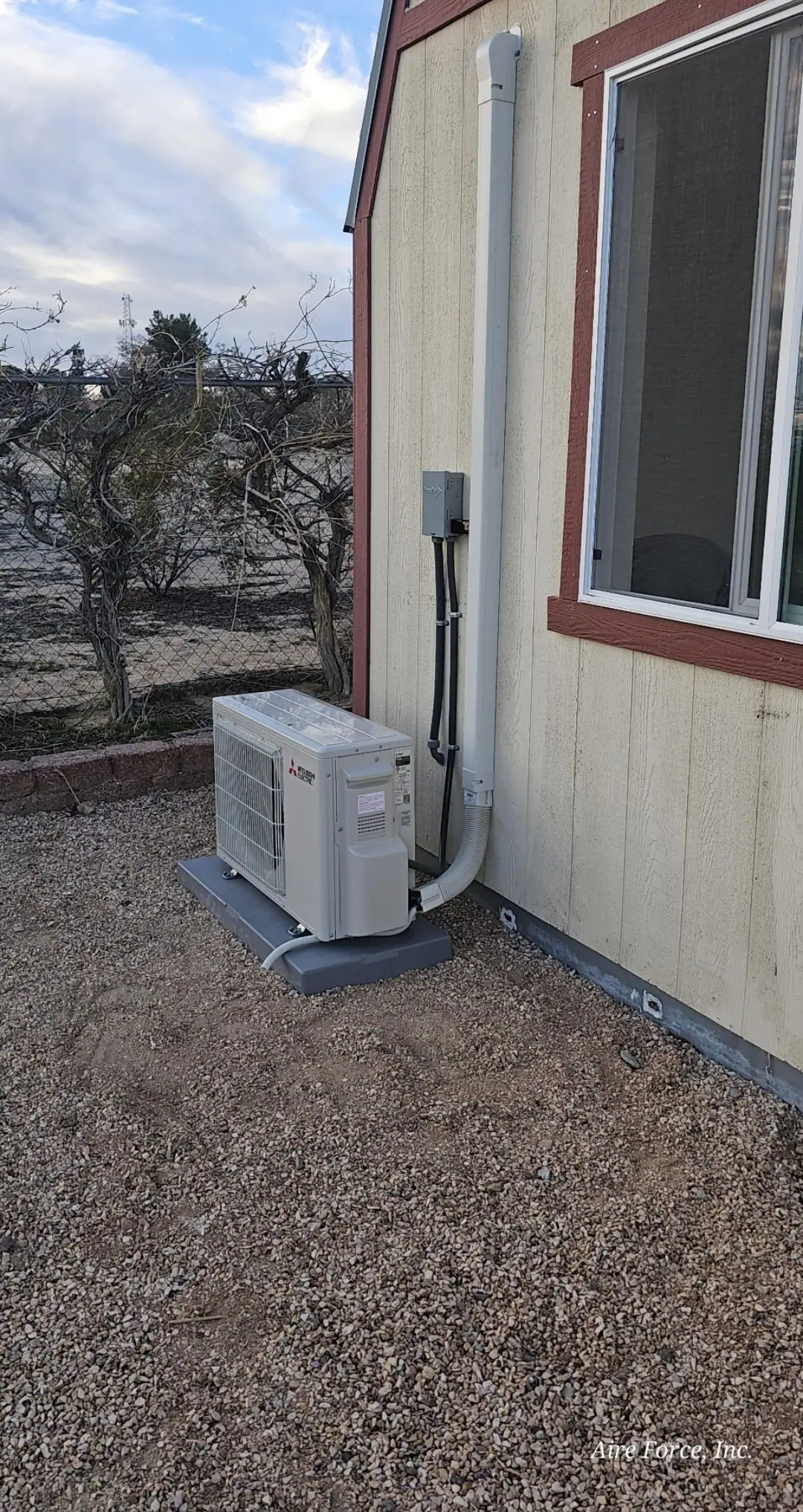
The outdoor unit you see beside the house can be one of a few things, and the replacement is when you pick which:
| System | How it works | Often a good fit when |
|---|---|---|
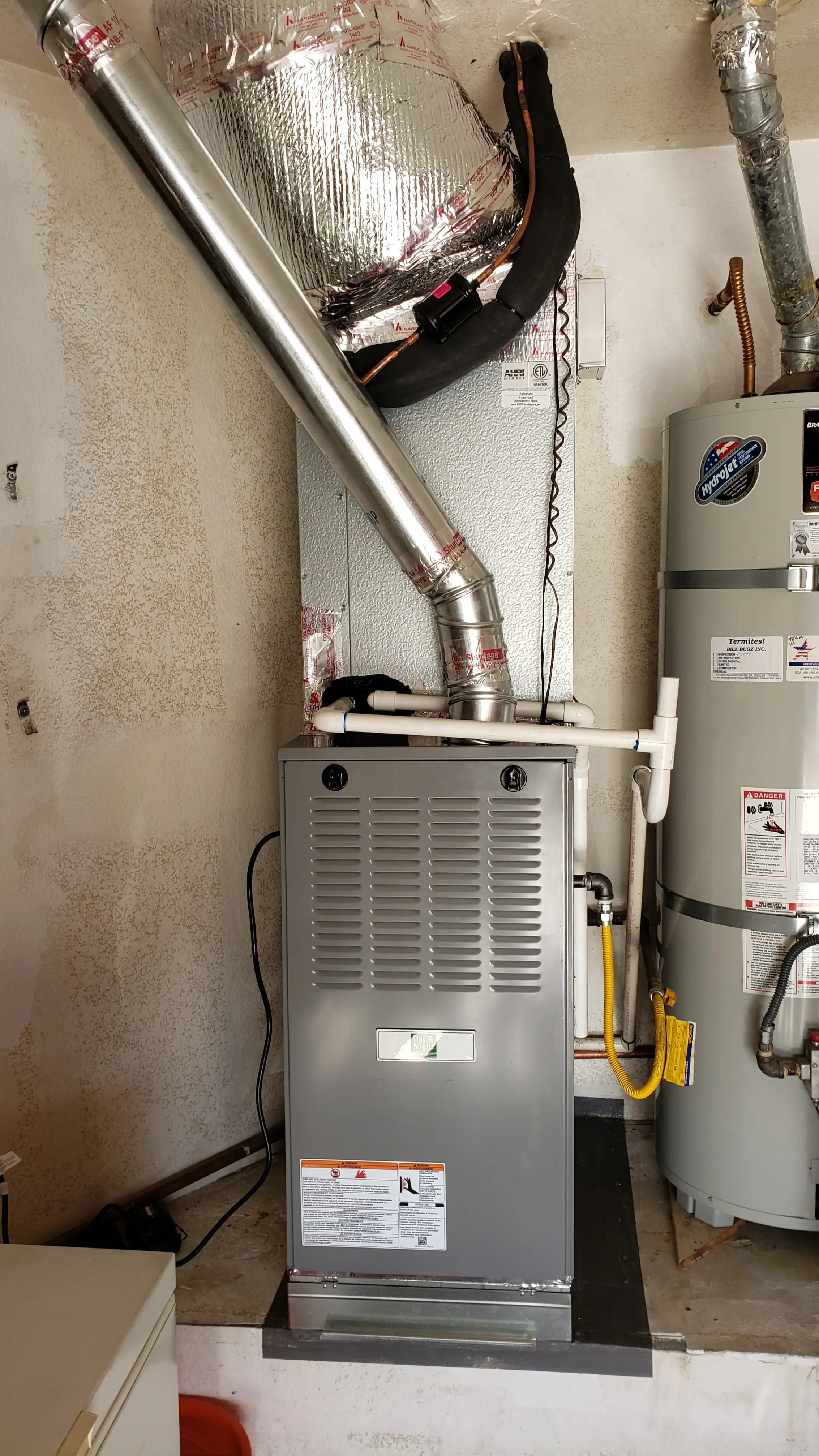
| Air conditioner with a gas furnace | The outdoor unit only cools; the furnace inside heats and moves the air | The furnace is newer or you want to keep gas heat |
| Heat pump | The same outdoor unit cools in summer and heats in winter | Both the AC and the furnace are old, or there is no gas to the house |
| Heat pump with a furnace backup | The heat pump carries most of the heating and the furnace takes the coldest mornings | You want lower heating bills and still want gas heat on hand |
| Ductless mini-splits | Units in each room, no ducts | No ducts, poor ducts, or rooms the central air never reached |
Our guide to mini-splits and central air compares the two for a whole house, and our heating installation page covers the furnace side of the choice.
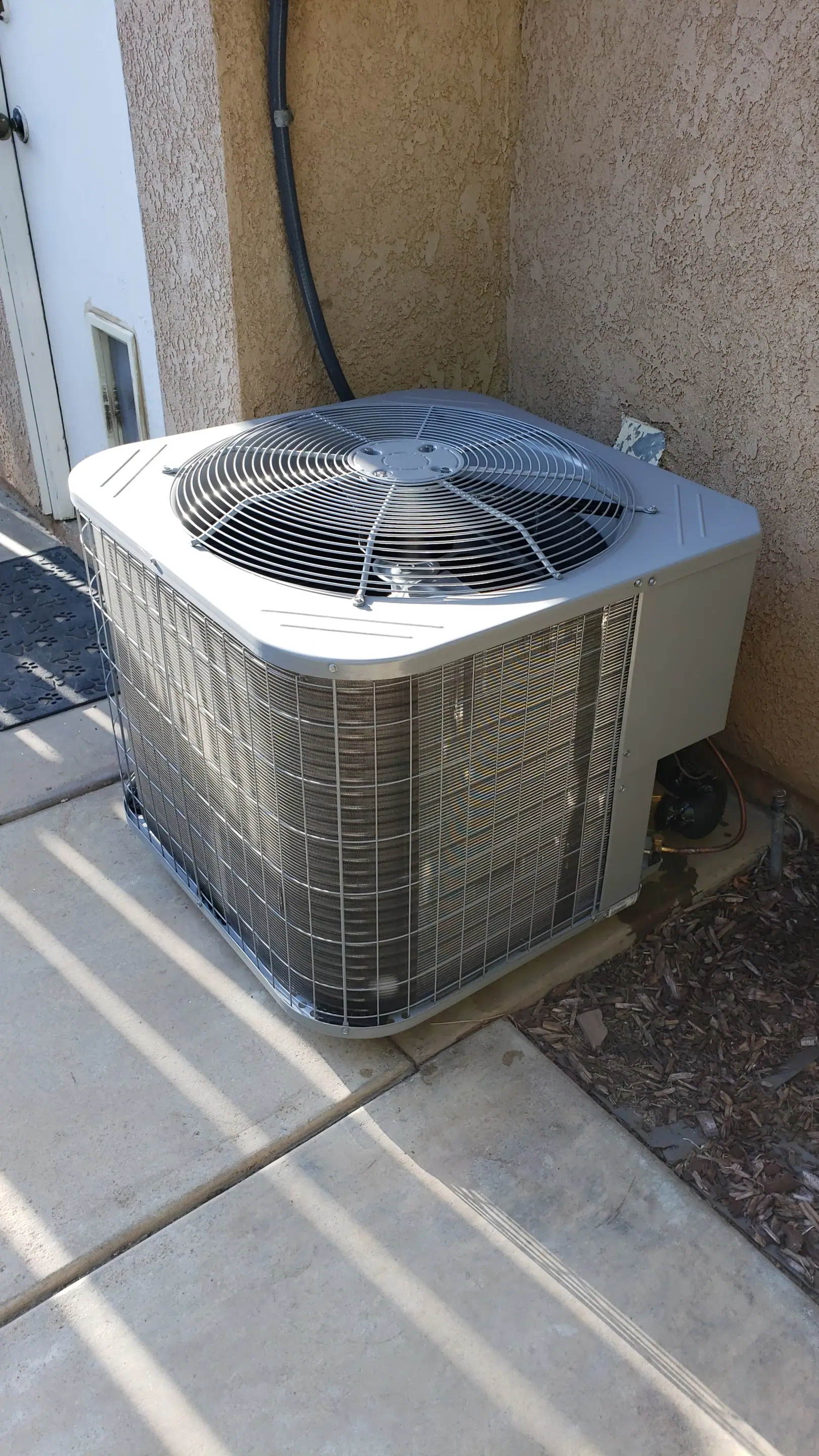
Efficiency rules for the hot, dry Southwest
Federal efficiency standards put California in a hot-dry Southwest region with Arizona, Nevada and New Mexico, and the rules here are stricter than in most of the country. Since January 1, 2023, a split-system central air conditioner under 45,000 Btu/h, the size of most home systems, has to reach at least 14.3 SEER2 and an EER2 of at least 11.7, or 9.8 for models rated 15.2 SEER2 and up; bigger units have slightly lower minimums. The Department of Energy applies the rule by the day the unit is installed, so an older model sitting in a warehouse can’t legally go in here.
SEER2 measures efficiency across a whole cooling season. EER2 measures it at 95°F, when the system is working its hardest, and the DOE points out that it matters most in hot, dry climates. WeatherSpark puts Palmdale’s average July high right at 95°F, so compare the EER2 on every quote, not just the SEER2. A heat pump also carries an HSPF2 for its heating, with a national minimum of 7.5.
Sizing it for 95-degree afternoons
The right size comes from a room-by-room load calculation, the method in ACCA Manual J. It counts the glass on each wall and which way it faces, the attic insulation, where the ducts run, the people in the house and the heat their appliances give off. A west-facing living room with big windows can need far more cooling than a bedroom of the same size on the north side.
Sizing up “to be safe” backfires. A unit that is too big cools the thermostat’s corner of the house in a few minutes, shuts off, and leaves the far rooms warm; the short runs also wear it out faster. Ask for the load calculation behind any size you are quoted, and be wary of a number that simply matches the label on the old unit.
The outdoor unit, the indoor coil and the lines between
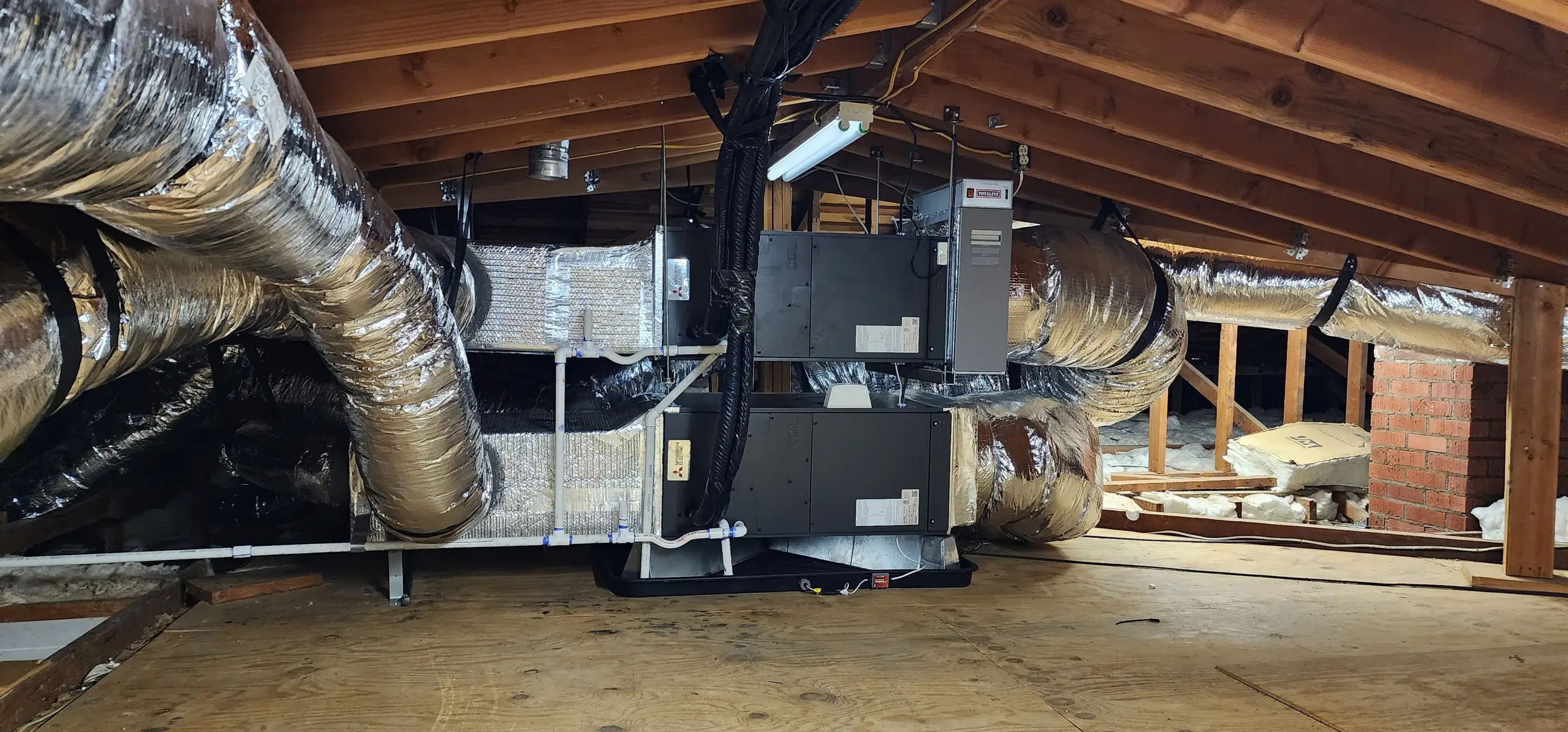
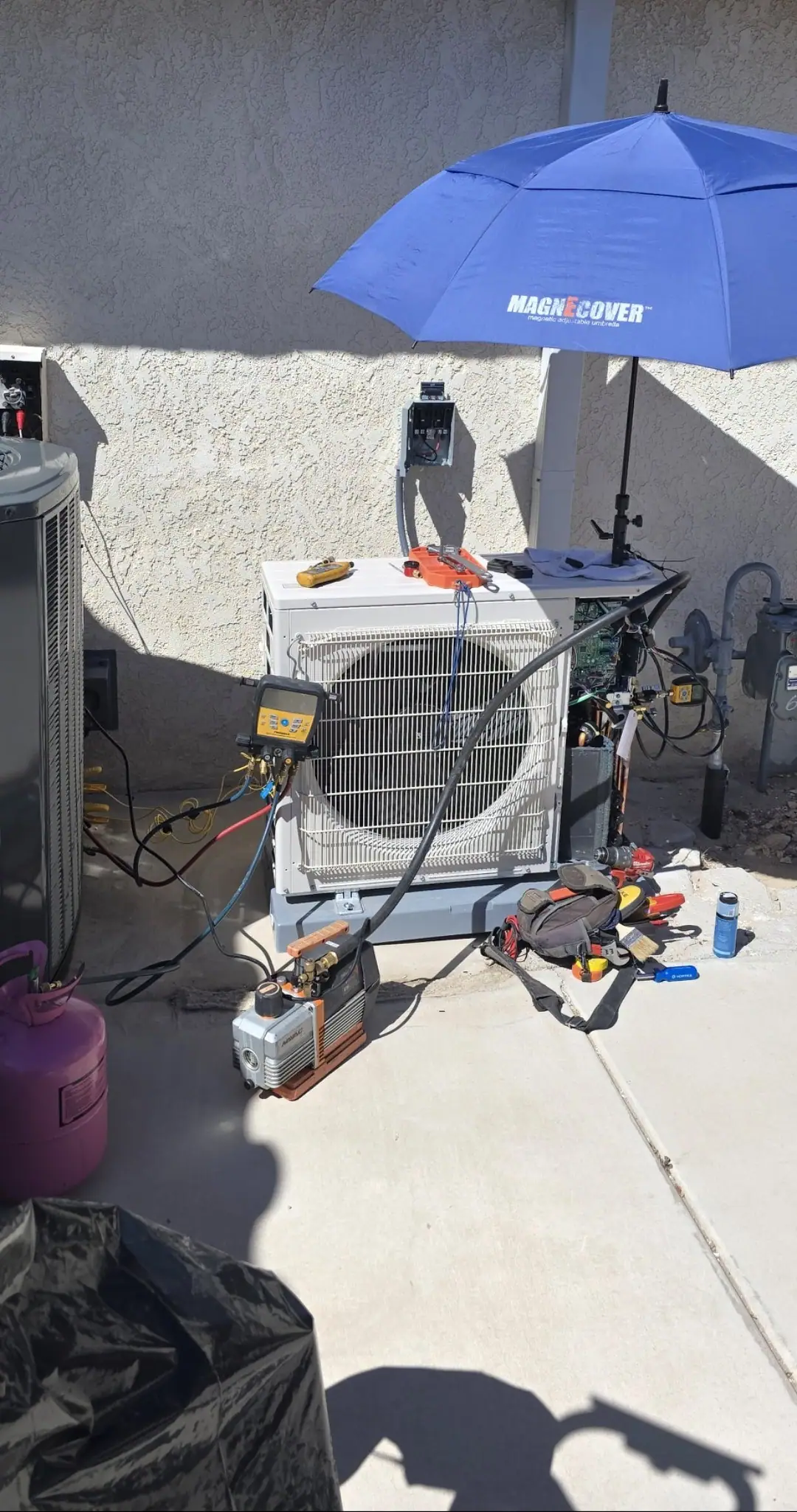
A central air conditioner is two halves that have to match: the outdoor unit and the coil inside, on top of the furnace or in the air handler. The pair is what gets rated, and every rated pair is listed in the AHRI Directory. New units made from 2025 on use lower global warming refrigerants such as R-454B and R-32 under the EPA’s Technology Transitions program, so a new outdoor unit usually means a new coil to match it.
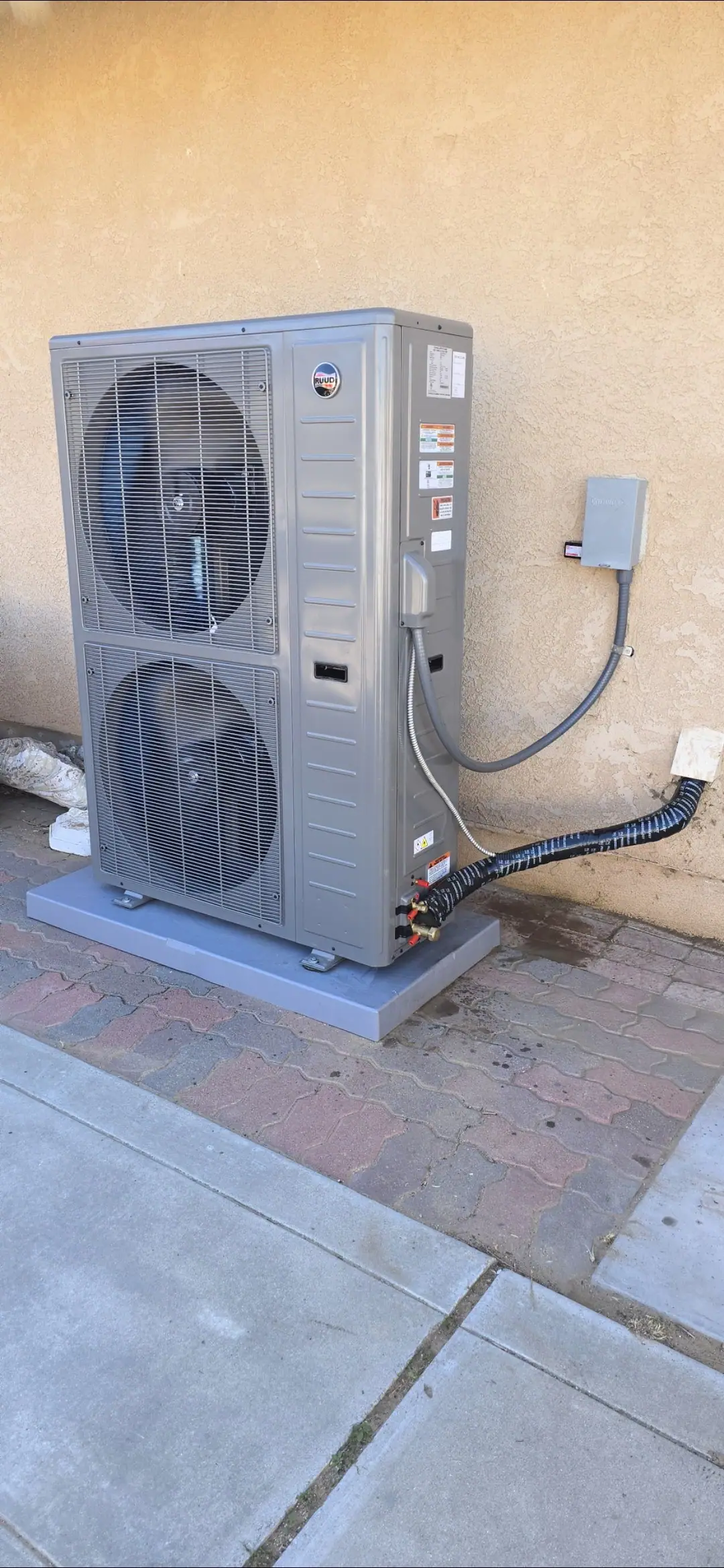
The copper lines that join the two get a look too. Whether they can stay depends on their size, their condition and what the new equipment’s maker allows; if they are buried in a wall or a slab, that changes the plan. Outside, the unit needs a level pad, open air around it, its own electrical circuit and a disconnect switch within sight of it. In the valley it also helps to set it where tumbleweeds and blown trash won’t pile against the coil.
Permits, the refrigerant check and duct testing
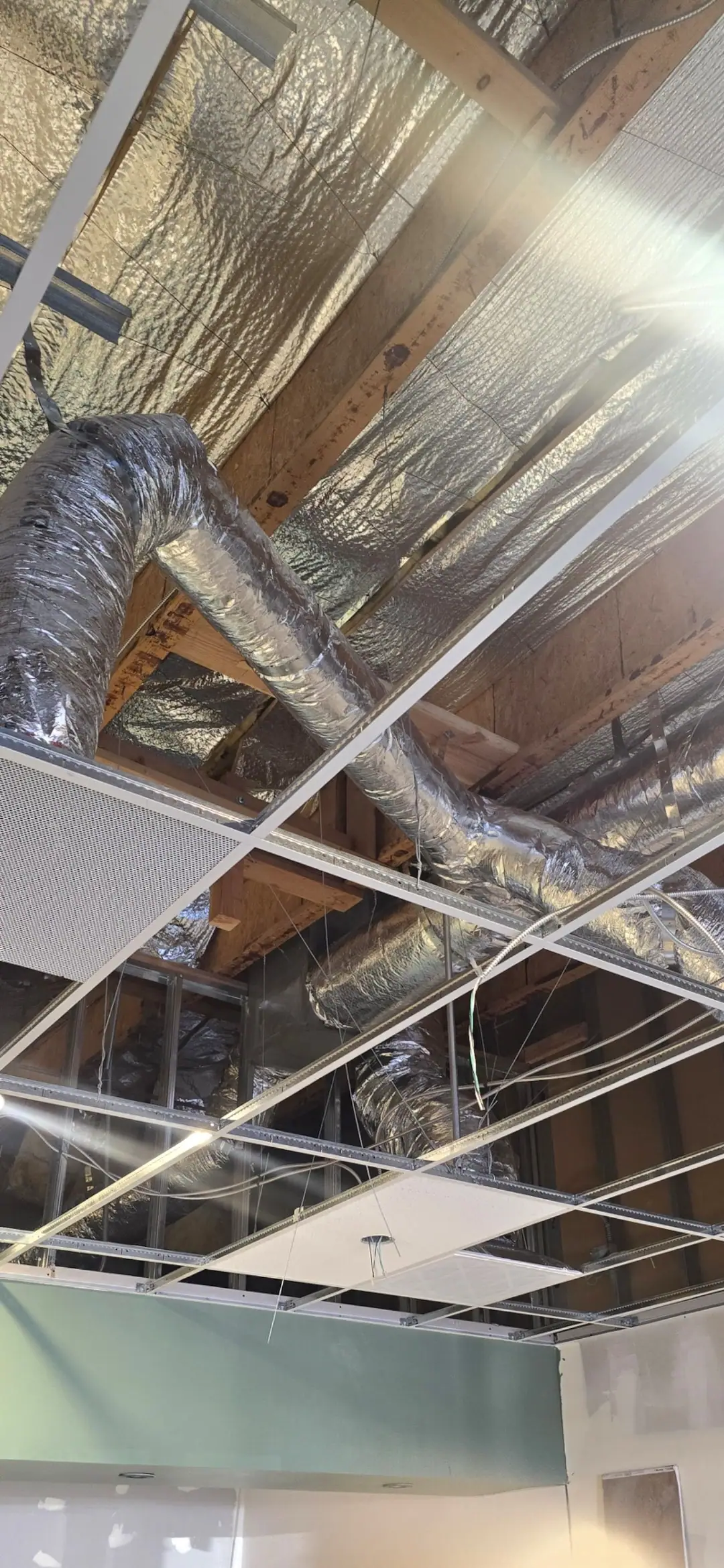
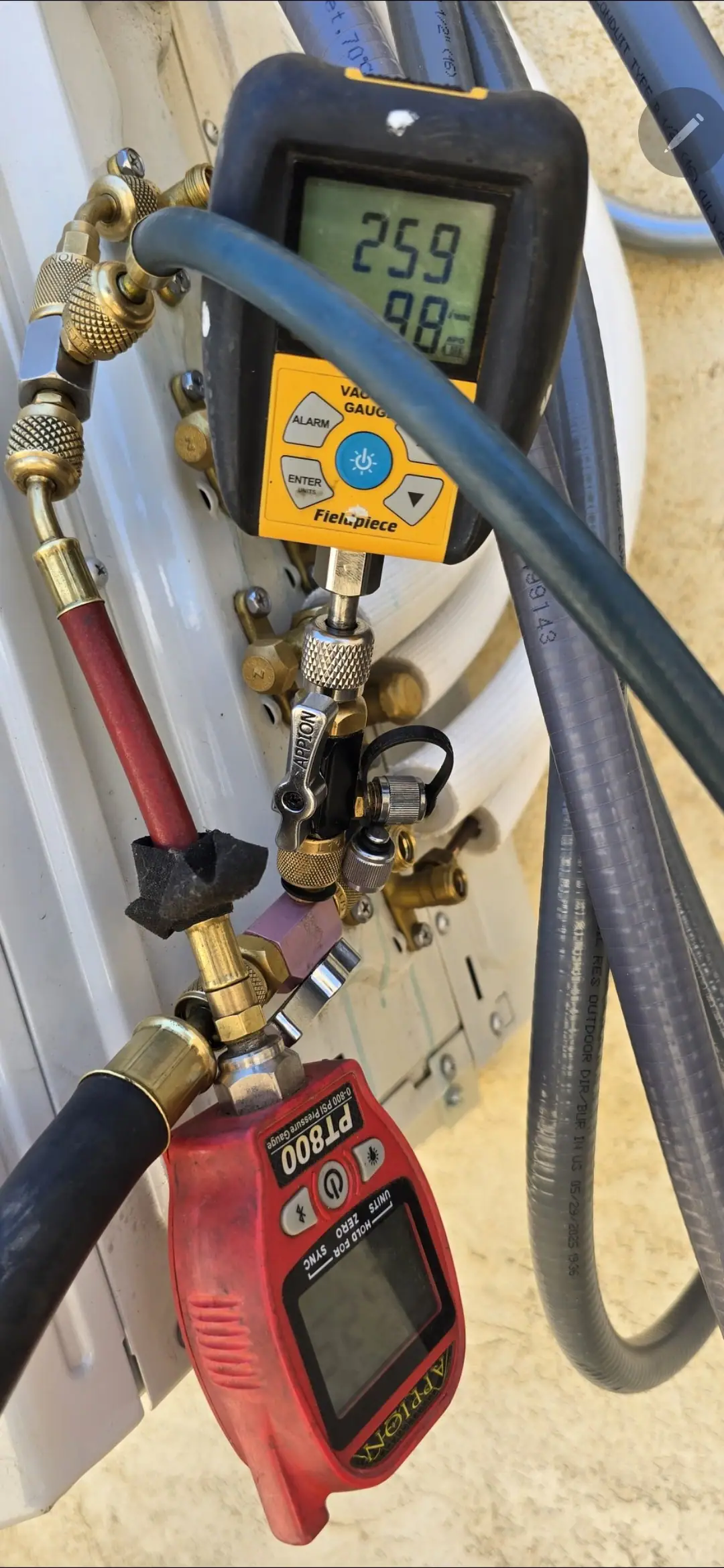
Palmdale and Lancaster are in California building climate zone 14 (California Energy Commission). In that zone, the state’s Energy Code has an independent rater verify the refrigerant charge when an air conditioner or heat pump is installed or replaced, and swapping the outdoor unit, the coil or the air handler also brings in a duct leakage test. The 2025 standards cap leakage at 10 percent of the system’s airflow, or 7 percent to the outside, with exceptions for duct systems under 40 feet and ones already sealed and tested.
Our guide to HVAC permits in Palmdale and Lancaster explains who issues the permit for your address and what paperwork you should end up with. If the ducts fail their test, our duct repair page covers what fixing them involves. Rebates have thinned out: the federal heat pump credit ended for equipment placed in service after 2025 (IRS), and our post on heat pump rebates in Palmdale tracks what is left.